The Illusion of Productivity: Why Aesthetic Notes Fail You
Hey there, future IB high-achiever! Let's get straight to it. You're pouring hours into your notes, making them look absolutely perfect – color-coded, beautifully drawn diagrams, pristine handwriting. They're a work of art, right? But here's the tough truth I need to share: those gorgeous notes might actually be sabotaging your IB success. It’s a common pitfall, and one we need to tackle head-on if you're serious about mastering your subjects.
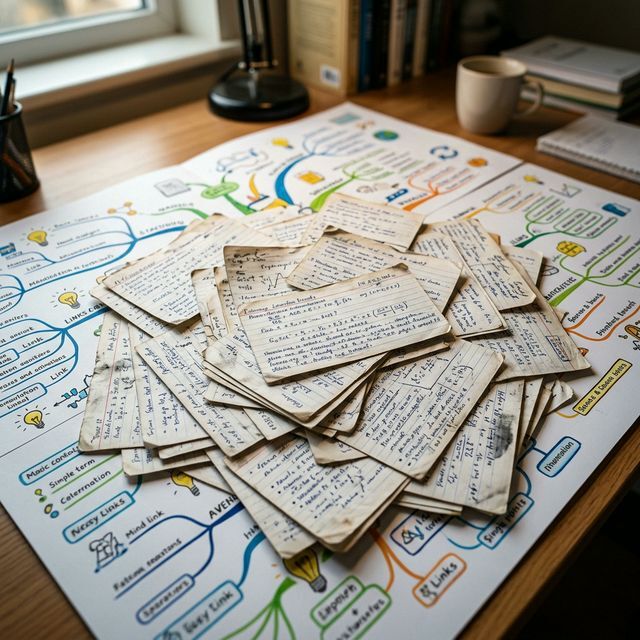
Many IB students fall into the trap of creating visually stunning, color-coded notes, mistaking their aesthetic appeal for genuine learning. This passive review method creates a 'fluency illusion,' where familiarity with the material's appearance is confused with actual mastery, leading to poor retention and performance. True IB success demands active recall, not passive aesthetics.
The "Fluency Illusion" Explained: Your Brain's Sneaky Trick
Imagine you're trying to learn a new language. You look at a list of vocabulary words and their translations. If you just keep re-reading the list, the words start to look familiar. You feel like you know them. But then, when someone asks you to recall a word from memory without the list in front of you, you freeze. This is the fluency illusion in action – your brain mistakes recognition for recall.
In the context of your IB notes, simply looking at your beautifully highlighted summary tricks your brain into thinking, 'Oh, I've seen this before, I must know it!' But true knowledge isn't about *recognizing* information; it's about being able to *retrieve* it from scratch when the pressure is on in an exam. Passive review, like rereading, only builds this dangerous illusion. Your brain isn't actively working to pull the information out, so those neural pathways for retrieval remain weak.
The Trap of "Complexity Bias": Why We Love Elaborate Systems
Why do we gravitate towards these elaborate note-taking systems? It often comes down to something called "Complexity Bias." Our brains sometimes trick us into believing that a more complicated solution is inherently better or more effective, even when a simpler, more direct approach would yield superior results. Creating a ten-page, color-coded mind map *feels* productive because it's a complex, time-consuming task. It gives us a sense of accomplishment, but that feeling is often detached from actual learning outcomes.
The hidden cost of this bias is immense. The sheer effort involved in maintaining a perfectly aesthetic system can lead to task avoidance. You might procrastinate on actually *starting* your study session because the thought of creating another perfect diagram or summary feels overwhelming. This time, which could be spent on genuine cognitive work like memorization and self-testing, is instead consumed by superficial organization. Mathematically, the return on investment (ROI) for time spent on aesthetic note-taking is incredibly low compared to active methods. Hours spent drawing a pristine mind map might yield only minimal retention, while the same hours dedicated to active recall can exponentially boost your long-term memory.
The Powerhouse Duo: Active Recall & Spaced Repetition for IB
So, if aesthetic notes are a no-go, what’s the secret sauce for true IB mastery? It boils down to two scientifically proven pillars of effective learning: Active Recall and Spaced Repetition. These aren't just buzzwords; they're the scientific backbone of how your brain actually learns and retains information.
Active Recall: Forging Strong Neural Pathways
Active recall, also known as retrieval practice, is exactly what it sounds like: actively retrieving information from your memory. Instead of passively re-reading, you force your brain to pull the information out. Think of it like a muscle – the more you exercise it, the stronger it gets. Each time you successfully recall a piece of information, you strengthen the neural pathway associated with that memory, making it easier to access next time.
- What it is: Retrieval practice, self-testing, asking yourself questions without looking at the answer.
- Why it works: It leverages the principle of "desirable difficulty." Learning isn't supposed to be easy all the time. When you struggle a little to recall something, your brain works harder, and that effort solidifies the memory.
- Examples in practice:
- Flashcards: The classic. Question on one side, answer on the other.
- Blurting: After reading a section, close your book/notes and write down *everything* you can remember about it.
- Practice Questions: The ultimate form of active recall. Doing past paper questions forces you to retrieve and apply knowledge under exam conditions.
- Self-Quizzing: Turn every heading, subheading, or key concept in your textbook into a question.
Spaced Repetition: Defeating the Forgetting Curve
Now, combine active recall with its equally powerful partner: Spaced Repetition. This technique capitalizes on how our memory naturally fades over time – a phenomenon known as the Forgetting Curve, first described by Hermann Ebbinghaus. The key insight is that by strategically reviewing material at increasing intervals, you can dramatically slow down this forgetting process and lock information into your long-term memory.
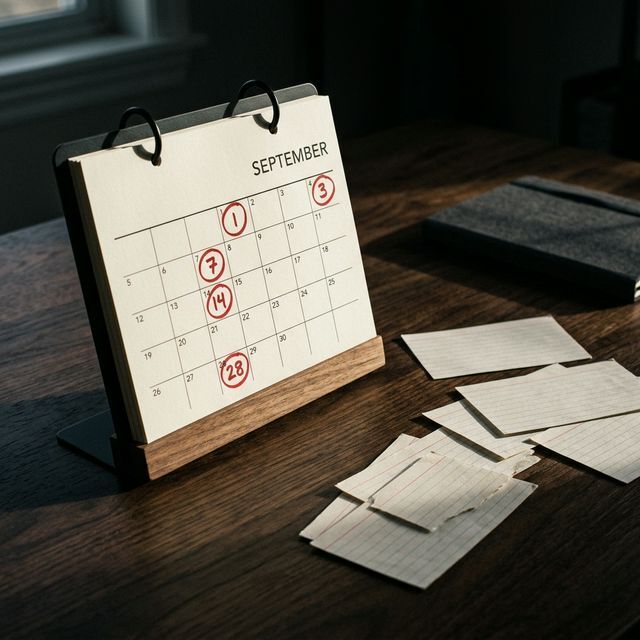
Mathematically, imagine your memory strength for a piece of information decreases exponentially after you learn it. If you review it too soon, you waste time. If you review it too late, you've forgotten too much. Spaced repetition aims to hit that 'sweet spot' just before you're about to forget, solidifying the memory each time. The intervals between reviews systematically increase (e.g., 1 day, 3 days, 7 days, 14 days, 30 days), making the process highly efficient. This isn't just about reviewing; it's about *optimizing* your review schedule.
How it works:
- You learn a concept.
- You review it shortly after (e.g., 24 hours).
- If you recall it successfully, the next review interval is longer (e.g., 3 days).
- If you struggle or fail to recall, the interval shortens, or you reset it, indicating you need more frequent practice.
Tools for Spaced Repetition:
- Anki: A powerful digital flashcard app that uses an algorithm to manage your review schedule automatically. It's a game-changer for IB students.
- Leitner System: A physical flashcard system using boxes. Cards you get right move to a box with longer review intervals; cards you get wrong move back to the first box.
Your New IB Study Blueprint: Actionable Steps
Ready to make the shift? Excellent! Here’s a step-by-step blueprint to fundamentally alter your workflow from passive transcription to active self-assessment, ensuring every hour you spend studying for the IB is maximally effective.
Step 1: Embrace "Lean" Notes (Not "Pretty" Notes)
The goal is no longer to create a comprehensive, textbook-style summary. Instead, aim for notes that are lean, concise, and serve as a scaffold for your brain, not a substitute for it. Think of your notes as a set of triggers or prompts for active recall.
- Focus on Key Ideas: What are the absolute core concepts, definitions, and theories?
- Use Questions: Frame your notes as questions you need to answer. E.g., instead of "Photosynthesis is the process..." write "What is photosynthesis?" or "How does photosynthesis occur?"
- Examples and Visual Cues: Include just enough detail to trigger your memory of a concept, focusing on crucial examples, formulas, or simplified diagrams. Avoid lengthy prose.
- Keep it Messy (If it works for you!): Don't obsess over perfect handwriting or color-coding. The utility of the notes for self-testing is paramount.
Step 2: Transform Notes into Active Recall Tools
Once you have your lean notes, the next crucial step is to immediately convert them into tools for active recall. This is where the real learning happens.
- Flashcards are King: For every key concept, create a flashcard.
- Physical Flashcards: Write a question on one side, the answer on the other.
- Digital Flashcards (Anki, Quizlet): Leverage these for efficiency, especially Anki for its built-in spaced repetition algorithm.
- Question Banks: Turn textbook subheadings into questions, or use past paper questions as a direct source for self-quizzing.
- Mind Maps (with a twist): If you like mind maps, use them as a *testing* tool. Draw a blank mind map with only central themes, then try to fill in all the branches and details from memory.
Step 3: Master Your Mistakes: Active Error Review
This step is often overlooked, but it's where significant growth occurs. Simply getting a question wrong isn't enough; you need to understand *why* you got it wrong and actively work to fix that gap.
- Record Your Errors: Keep an "error log" or a "mistake bank." For every question you answer incorrectly during self-testing or practice, record:
- The question itself.
- Your incorrect answer.
- The correct answer.
- A detailed explanation of *why* your answer was wrong and *why* the correct answer is right.
- What specific concept or skill you need to revisit.
- Revisit and Re-test: Don't just read the correct answer. Actively re-test yourself on the concepts you got wrong, preferably after a short delay, to ensure the new understanding sticks.
- Analyze Patterns: Are you consistently making the same type of mistake? Is there a particular topic area that's always tripping you up? Identifying these patterns allows you to target your study more effectively.
Step 4: The Feynman Technique: If You Can't Explain It, You Don't Understand It
This powerful technique, named after Nobel laureate physicist Richard Feynman, is an excellent way to truly gauge your understanding and solidify complex concepts.
- Choose a Concept: Pick a topic you're studying for the IB.
- Teach it to a Child: Write down or explain the concept as if you were teaching it to someone with no prior knowledge (e.g., a 10-year-old). Use simple language, analogies, and avoid jargon.
- Identify Gaps: As you explain, you'll inevitably stumble, realize you don't fully understand a particular part, or struggle to simplify a complex idea. These are your knowledge gaps.
- Go Back to the Source: Revisit your textbook or notes to clarify the areas where you struggled.
- Refine and Simplify: Try explaining it again. Repeat the process until you can articulate the concept clearly and concisely, demonstrating a deep, intuitive understanding.
Overcoming Psychological Barriers to Effective IB Study
Changing study habits is hard. Your brain is wired for comfort, and active recall can feel uncomfortable because it immediately highlights your weaknesses. But remember, discomfort is where growth happens!
Confronting the Fluency Illusion Head-On
The best way to combat the fluency illusion is through consistent, honest self-testing. Don't just glance at your notes; actively quiz yourself under conditions that simulate an exam. Use timers, write out full answers, and resist the urge to peek. The initial shock of realizing you don't know something is a healthy indicator that your brain is now engaged in genuine learning, not false familiarity.
Escaping the Sunk Cost Fallacy
You've spent hours on those beautiful notes. It feels wasteful to abandon them now, right? This is the Sunk Cost Fallacy – an irrational tendency to continue an endeavor because of previously invested resources. Recognize this trap. Your past investment is gone, regardless of what you do now. Focus on optimizing your *future* learning. The time you save and the grades you gain by switching to effective methods will far outweigh the perceived loss of those initial hours.
Think of it this way: Would you rather spend another 10 hours on an inefficient method and get a 5, or spend 5 hours on an efficient method and get a 7? The choice is clear. Let go of the past and embrace a more productive future.
Embracing the Discomfort of Learning
Active recall is challenging. It forces you to confront what you don't know, which can be frustrating and even demoralizing at first. But this struggle is precisely what makes it effective. Your brain isn't a passive sponge; it's a muscle that needs to be worked. Every time you struggle to retrieve a piece of information, you're building stronger, more resilient memory pathways.
- Reframing Mistakes: View mistakes not as failures, but as invaluable feedback. Each incorrect answer tells you exactly where your knowledge gaps are, allowing you to target your efforts precisely.
- Growth Mindset: Adopt a growth mindset. Believe that your intelligence and abilities can be developed through dedication and hard work. The discomfort you feel is a sign that your brain is actively growing and making new connections.
- The "Sweet Spot" of Difficulty: Aim for a level of challenge where you're getting about 70-80% of questions correct. If it's too easy, you're not learning efficiently. If it's too hard, you might get demotivated.
Your Path to IB Excellence
The IB Diploma is a marathon, not a sprint, and effective study strategies are your most powerful training tools. By ditching the allure of aesthetic notes and fully embracing the scientifically backed power of active recall and spaced repetition, you're not just studying harder; you're studying smarter. You're building a robust, long-lasting memory that will serve you not only in your IB exams but far beyond. Trust the process, embrace the struggle, and watch your understanding – and your grades – soar. You've got this!