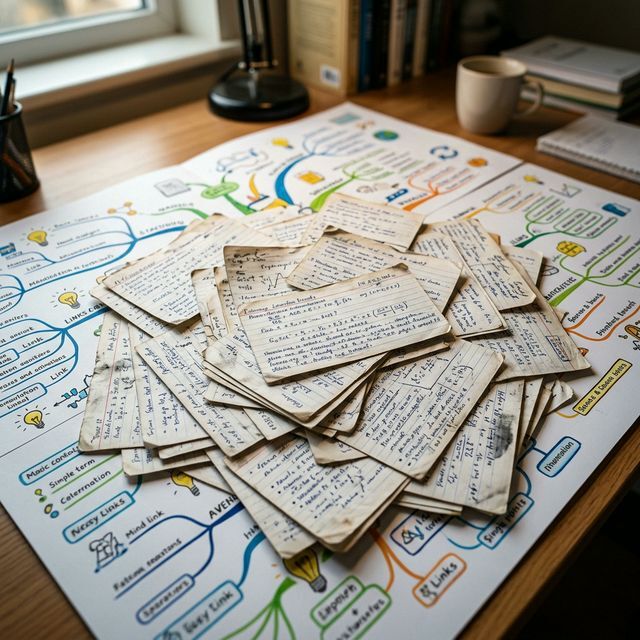
Introduction: Beyond Rote Learning – The Power of the Ultimate Error Log
Hey there, future IB high-achiever! Are you tired of feeling like you're studying endlessly, only to make the same mistakes on practice papers? Do you find yourself just glancing at mark schemes and hoping the knowledge sticks? If so, you're not alone. Many IB students fall into the trap of passive revision, but today, we're going to fundamentally change that. We're diving deep into a game-changing strategy: The Ultimate Error Log. This isn't just about noting a wrong answer; it's about engineering your learning to perfection, making every single mistake a powerful stepping stone towards your top grades.
What is the Ultimate Error Log?
The Ultimate Error Log is a dynamic, metacognitive revision tool where you meticulously record, analyze, and systematically rectify every mistake you make. Instead of just identifying a wrong answer, you articulate precisely why the error occurred, transforming vague revision into a targeted, efficient, and highly effective learning process that drastically consolidates knowledge and saves you precious study time.
The Deep Mechanics: Why This Works (Psychology & Maths Unpacked)
Let's peel back the layers and understand the powerful science behind why the Ultimate Error Log isn't just "another study tip," but a fundamental shift in your learning architecture. This isn't magic; it's applied cognitive psychology and a touch of statistical optimisation.
The Illusion of Competence vs. Active Recall
- The Trap: When you look at a mark scheme after getting a question wrong, your brain often says, "Ah, yes, I knew that!" This is the "illusion of competence" – you recognize the correct answer, but you haven't actually recalled it from memory or generated it independently. This passive exposure is incredibly weak for long-term retention.
- The Fix: The error log forces active engagement. By writing down the question, your incorrect attempt, and the correct method, you're actively processing the information. More importantly, when you articulate the cause of the error, you're engaging in deep, elaborative encoding – linking new information to existing knowledge and strengthening neural pathways.
Categorising Errors: Pinpointing the Root Cause
Think of your errors as data points. Just saying "I got it wrong" is like saying "my car broke down" without knowing if it's a flat tire or an engine failure. The power comes from precise diagnosis. Your mistakes typically fall into distinct, actionable categories:
- Factual Errors: Simple recall failures. Forgetting a specific formula (e.g., the derivative of ln(x)), a historical date, or a key definition.
- Procedural Errors: You know the facts, but the steps you took were flawed. This is common in maths or sciences where you might misapply a rule, make a calculation error, or skip a logical step.
- Conceptual Gaps: The most insidious. You fundamentally misunderstand a core concept. This isn't about forgetting a formula, but not grasping why or when to use it, or how different concepts interrelate.
- Careless Mistakes: Often driven by external factors – rushing, fatigue, misreading the question (e.g., "explain" vs. "evaluate"), or simple transcription errors. These are frustrating but often the easiest to fix with disciplined habits.
- Exam Technique Errors: Not managing time effectively, failing to show sufficient working, or not addressing all parts of a command term.
Tutor Tip: The "Why" Multiplier Effect
Explicitly writing down the root cause of the error – "I rushed the calculation," "I confused the conditions for this theorem," "I didn't read the 'evaluate' command term properly" – is critical. This metacognitive act (thinking about your thinking) significantly reinforces long-term memory. Data even suggests that this type of self-checking can reduce calculation errors by up to 28% over time! You're literally re-wiring your brain.
Actionable Implementation: Your Step-by-Step Protocol
Ready to turn theory into practice? Here's the rigorous protocol you need to follow after every practice assessment, mock exam, or even a tough homework assignment. Consistency is key here, so make this a non-negotiable part of your study routine.
- Step 1: The Centralised Error Journal
- What: Create a dedicated physical notebook or a digital document (e.g., Google Doc, Notion, OneNote) solely for your error log. Do NOT just scribble notes on your practice paper. This needs to be a living, breathing document.
- How: For each question you got wrong (or even partially wrong):
- Copy the original question in full.
- Copy your incorrect answer/working.
- Copy the correct solution/method (from the mark scheme or a reliable source).
- Step 2: The Deep Dive – Articulating the "Why"
- What: This is the heart of the log. You need to write a concise, yet comprehensive, reflection on why you made the mistake.
- How: Ask yourself:
- Was it a factual recall issue? (e.g., "Forgot the specific conditions for L'Hopital's rule.")
- Was it a procedural misstep? (e.g., "Used the chain rule incorrectly when differentiating a product.")
- Is there a conceptual gap? (e.g., "Didn't understand the difference between induced and spontaneous emission in Physics.")
- Was it carelessness? (e.g., "Misread 'calculate the rate' as 'calculate the amount,' leading to a unit error.")
- Did I miss a command term? (e.g., "Only described when the question asked to 'analyse and evaluate'.")
- Did I run out of time? (e.g., "Spent too long on an earlier question, rushed this one.")
- Crucial: Explicitly categorize your error. This helps you see patterns later.
- Additionally: Note any specific phrases from the mark scheme that you missed or misunderstood.
- Step 3: The "Fix Tip" – Your Personalised Rule
- What: Based on your "why," formulate a clear, actionable "fix tip" or corrective rule. This is your personal instruction manual for future success.
- How: This should be a concise, forward-looking statement.
- If factual: "Review all key formulas for Topic 3 (Trigonometry) by Friday."
- If procedural: "Always double-check the sign convention when substituting values into the quadratic formula."
- If conceptual: "Re-read Chapter 5.2 on Le Chatelier's Principle and draw a reaction profile diagram for every example."
- If careless: "Before starting a new question, underline all command terms and key numbers."
- Step 4: Spaced Repetition – The Ultimate Memory Reinforcer
- What: This is the most crucial, yet often skipped, step. You must re-engage with the exact same question from memory after a period of time.
- How:
- A few days later (e.g., 3-5 days), re-attempt the question from your error log without looking at the solution.
- If you get it right, great! Move it to a "mastered" section or note the date of successful recall.
- If you still struggle or get it wrong, repeat the entire Step 2 and 3 process, formulating a new, refined fix tip. The mistake hasn't been truly learned yet.
- Repeat this process at increasing intervals (e.g., 1 week, 2 weeks, 1 month). This is classic spaced repetition, proven to embed information into long-term memory.
Tutor Tip: Integrate with Your Schedule
Allocate specific time slots in your weekly study schedule for "Error Log Review." This isn't optional; it's as important as learning new content. Treat it like a mandatory lab session for your brain.
Common Pitfalls and How to Avoid Them
Even the best strategies can be derailed by common mistakes. Be aware of these traps to ensure your Ultimate Error Log truly serves its purpose:
- The Passive Glance: The biggest killer of effective revision. You get a question wrong, look at the mark scheme, nod, and move on. This creates a dangerous "illusion of competence." You recognize the answer, but you haven't internalized it.
Solution: Force yourself to write down the "why" and a "fix tip" for every mistake. No exceptions. If you can't articulate why you got it wrong, you don't truly understand it.
- Neglecting Your Own History: You've diligently logged errors, but then you take your next practice paper without reviewing your past mistakes. This is like going into battle without checking your previous battle plans.
Solution: Before every new practice paper or major assessment, spend 15-30 minutes reviewing your error log. Pay special attention to recurring categories or frequently missed concepts. This primes your brain to avoid those specific traps.
- Vague Categorisation: Treating a fundamental conceptual misunderstanding the same as a careless calculation error. This prevents you from applying the right corrective action.
Solution: Be precise with your error categories (factual, procedural, conceptual, careless, technique). If you notice a high frequency in one category, it tells you exactly what kind of revision you need to prioritize. For example, many "conceptual gaps" mean you need to revisit core theory, while many "careless errors" mean you need to implement pre-exam checklists and focus drills.
- Skipping Spaced Repetition: You've logged the error, but you never re-attempt the question from memory. Without this crucial step, you haven't verified if the learning has truly stuck.
Solution: Schedule explicit "Error Log Re-attempt" sessions. Use a simple system: if you get it right, re-attempt in a week. If wrong, re-attempt in 2-3 days. This ensures true mastery.
Concluding Thoughts: Your Personalised Path to IB Mastery
The Ultimate Error Log is more than just a revision technique; it's a mindset. It transforms you from a passive consumer of information into an active engineer of your own knowledge. By embracing your mistakes, meticulously analysing them, and systematically rectifying them, you're not just improving your grades – you're developing critical thinking, problem-solving, and metacognitive skills that will serve you far beyond the IB diploma. Start today, be consistent, and watch your understanding, confidence, and scores soar. You've got this!