Understanding the Mere Urgency Effect in IB Study
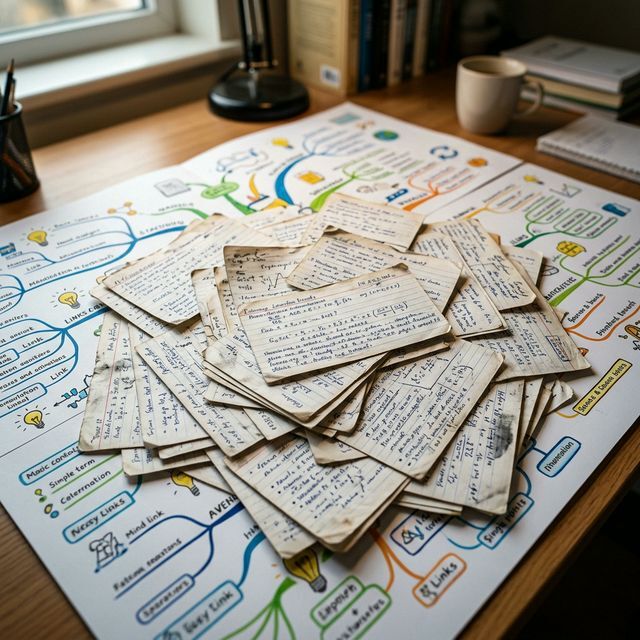
The Mere Urgency Effect describes our inherent tendency to prioritize tasks that feel urgent over those that are truly important, even if the important tasks offer significantly greater long-term rewards. For IB students, this often means getting bogged down in low-impact busywork like reorganizing notes, while neglecting critical, high-yield activities such as past paper practice or deep conceptual understanding, ultimately hindering academic progress.
Why Our Brains Love Busyness Over Breakthroughs
You've felt it, haven't you? That immediate satisfaction from ticking off a quick, urgent task – replying to an email, tidying your desk, or formatting a document. It's a mini-dopamine hit, a tiny reward for a small completion. Our brains are wired for this immediate gratification, which is why urgent tasks consistently win out over important, but non-urgent, ones. Mastering a complex IB topic, or completing a challenging past paper, offers no such immediate relief. The consequences of procrastinating on these high-impact tasks are often far off, making it easy for our predictably irrational brains to push them to "tomorrow."
Tutor Tip: The "Busy" Trap
Counterintuitively, the busiest students are often the most susceptible to the Mere Urgency Effect. They feel overwhelmed, yet they waste precious time on low-value tasks, creating a vicious cycle. Recognizing this is the first step to breaking free.
The Analytical Toolkit: Decoupling Urgency from Importance
To truly beat this bias, we need to consciously separate what feels urgent from what is genuinely important. This isn't just a philosophical exercise; it's a strategic necessity.
The Eisenhower Matrix: Your IB Task Compass
Imagine a simple 2x2 grid. This is the Eisenhower Matrix, a powerful framework that helps you categorize tasks based on two axes: Urgency and Importance. Let's map your IB life onto it:
- Quadrant 1: Urgent & Important (Do First)
- Examples: Imminent Internal Assessment (IA) deadlines, upcoming mock exams, last-minute review of a topic you know will be on a test tomorrow.
- Strategy: These are true emergencies. Tackle them immediately. However, a well-managed IB student strives to minimize time spent here by proactive planning. If you're constantly in Q1, you're reacting, not strategizing.
- Quadrant 2: Important & Not Urgent (Schedule)
- Examples: Consistent past paper practice, deep conceptual understanding, extended essay research, active recall sessions, long-term revision planning, seeking clarification on complex topics.
- Strategy: This is your "sweet spot" for IB success. These tasks drive 80% of your results. Dedicate significant, protected time to Q2 activities. This is where true mastery happens.
- Quadrant 3: Urgent & Not Important (Delegate/Minimize)
- Examples: Responding to non-critical group chat messages, attending optional but low-value school meetings, helping a friend with a task you shouldn't be doing, extensive note-taking (when active recall is more effective).
- Strategy: These tasks often feel pressing because they demand immediate attention from others, but they don't contribute significantly to your IB goals. Learn to say "no," or batch these activities.
- Quadrant 4: Not Urgent & Not Important (Eliminate)
- Examples: Endless social media scrolling, binge-watching, excessive re-organizing of digital files, creating elaborate color-coded study timetables you'll never follow.
- Strategy: These are pure time-wasters. Ruthlessly eliminate them from your study schedule. They provide momentary distraction but drain your energy and focus.
The crucial insight for IB students is that most high-yield activities, like past papers or active recall, fall squarely into Quadrant 2: Important but Not Urgent. The Mere Urgency Effect tricks us into spending too much time in Quadrants 1 and 3.
The Pareto Principle (80/20 Rule): Maximizing Your Academic Leverage
This principle, often called the 80/20 rule, states that roughly 80% of your academic results will come from 20% of your efforts. In the context of the IB, this means identifying those vital 20% of tasks (often Q2 activities from the Eisenhower Matrix) that yield the greatest returns. For instance, 20% of your syllabus content might account for 80% of exam questions. Or, 20% of your study methods (e.g., active recall, spaced repetition, past paper analysis) will generate 80% of your grade improvement.
The mathematical implication here is profound: indiscriminately spending equal effort on all tasks is inefficient. A strategic IB learner focuses their energy on the critical few, not the trivial many. Substituting active retrieval practice with passive, urgent-feeling busywork (like re-reading notes) creates a dangerous "fluency illusion," where superficial familiarity is mistaken for true competence. You feel like you know it because your notes are beautiful, but you haven't actually tested your recall.
Tutor Tip: Fluency Illusion vs. True Mastery
Don't confuse the feeling of familiarity (e.g., "I've seen this before in my notes") with actual understanding and the ability to reproduce information under exam conditions. True mastery comes from active engagement, not passive consumption.
Actionable Strategies for IB Students
Knowledge of these biases is only half the battle. Here's how to translate theory into a robust, anti-urgency study system:
1. Protect Your Peak Productivity Hours with Time-Blocking
Identify your most productive 2-4 hours of the day. For many, this is in the morning when cognitive energy is highest. During this "sacred time," dedicate yourself exclusively to your most important, non-urgent (Quadrant 2) work. Use time-blocking: literally schedule these deep work sessions into your calendar as non-negotiable appointments. Treat them like a meeting with your future self, who desperately needs those 7s.
- How to Implement:
- Analyze your energy levels: Are you a morning lark or a night owl?
- Block out 2-4 hours in your calendar for "Deep Work: [Subject] Past Papers" or "IA Research."
- During this block, turn off notifications, close unnecessary tabs, and inform family/friends you are unavailable.
2. Engineer External Commitments for Vital Tasks
It's incredibly hard to hold yourself accountable to internal deadlines. Our brains are masters of rationalizing procrastination. The solution? External accountability. Make a promise to someone else.
- How to Implement:
- Peer Accountability: "Hey [Study Buddy], I'll send you my completed Math AA HL Paper 1 by Friday 6 PM. Can you check it?"
- Teacher Commitment: "Sir/Madam, I'm aiming to complete the full essay outline for my English Lit HL IA by next Tuesday. Would you be willing to give me quick feedback?"
- Study Group Deadlines: Agree with your study group to complete specific revision tasks by a certain date and review each other's work.
The fear of letting someone else down is a powerful motivator, far stronger than the abstract fear of a lower grade weeks or months away.
3. The Pomodoro Technique: Taming Daunting Tasks
Large, complex IB tasks can feel overwhelming, triggering avoidance. The Pomodoro Technique breaks these down into manageable, focused bursts.
- How it Works:
- Set a timer for 25 minutes (one "Pomodoro").
- Work intensely on a single, high-impact task (e.g., solving specific problems from a past paper, writing an IA section).
- When the timer rings, take a mandatory 5-minute break.
- After four Pomodoros, take a longer break (15-30 minutes).
This method forces you into high-impact work, even if only for 25 minutes, and the frequent breaks prevent burnout. It tricks your brain into starting the work, which is often the hardest part.
4. Batch Urgent Communications and Administrative Busywork
Emails, messages, permission slips, minor organizational tasks – these are the classic "urgent but not important" distractions. Instead of letting them interrupt your flow throughout the day, batch them.
- How to Implement:
- Designate specific, limited times of the day for these tasks (e.g., 12:00 PM and 4:00 PM).
- Outside these times, notifications are off, and you resist the urge to check.
- This prevents trivial tasks from bleeding into your dedicated deep study hours, maintaining cognitive focus.
Common Pitfalls and How to Avoid Them
The Complexity Bias: Don't Over-Engineer Your Productivity
One of the most insidious traps for IB students is "Complexity Bias." This is the preference for intricate, elaborate productivity systems over simple, direct execution. Instead of simply sitting down to tackle a past paper, you might spend hours:
- Debating the "perfect" revision methodology.
- Color-coding a hyper-detailed, multi-layered revision timetable you'll never stick to.
- Meticulously categorizing digital folders and renaming files.
This is an avoidance tactic. Your brain tricks you into believing that organizing about studying is the same as actually doing the studying. Simple, consistent action beats complex, inconsistent planning every single time.
Tutor Tip: The "Just Start" Principle
When faced with a daunting task, remember the power of "just starting." Even 5 minutes of focused effort can break the inertia and overcome the psychological barrier of beginning.
The Zeigarnik Effect: Unfinished Tasks Haunting Your Focus
Have you ever found yourself thinking about an unfinished email while trying to solve a complex physics problem? That's the Zeigarnik Effect at play. Our brains are terrible at letting go of unfinished tasks, constantly reminding us of them and splitting our focus away from deep work.
- How to Combat It:
- Reliable Capture System: Keep a single, trusted place (a notebook, a digital app) where you quickly jot down any trivial tasks that pop into your head. The act of writing it down signals to your brain that it's "captured" and doesn't need to be actively remembered.
- End-of-Work Shutdown Ritual: Before you finish your study session for the day, take 5-10 minutes to plan out your most important tasks for tomorrow. This involves:
- Reviewing what you achieved today.
- Identifying 1-3 critical tasks for tomorrow.
- Quickly outlining the first step for each task.
Rewiring for IB Success: From Reactive to Proactive
Ultimately, mastering time management in the IB isn't about being perfectly disciplined all the time; it's about understanding your own cognitive biases and systematically designing your environment to work with your predictable irrationality, rather than against it. Humans, by default, often act against their rational self-interest. Accepting this truth empowers you to create systems that nudge you towards what's important.
By consciously implementing frameworks like the Eisenhower Matrix to filter tasks, leveraging the Pareto Principle to focus on the 20% of work that drives 80% of your results, and rigorously guarding your peak cognitive hours against the illusion of urgent busywork, you will effectively rewire your study habits. The fundamental distinction between feeling busy and being productive is the ultimate key to sustainable academic success in the IB and beyond.