Thermal Energy Transfers: notes and practice questions
- This topic covers the macroscopic and microscopic properties of substances related to thermal energy.
- Density is given by .
- Kelvin temperature relates to average kinetic energy: .
- Internal energy is the sum of intermolecular potential and random kinetic energies.
- Thermal energy transfers occur via conduction, convection, and radiation.
- Heat transfer equations: for temperature change, for phase change.
- Rate of conduction: .
- Stefan-Boltzmann law for black bodies: .
- Apparent brightness: .
- Wien's displacement law: .
How it is examined
Both papers, and it pairs constantly with B.2 and E.5 because luminosity and apparent brightness are shared machinery. Paper 2 favours multi-step energy balances: heat a mass, change its phase, find the time at a stated power. Command terms: calculate, determine, show, describe, explain. A common generated-question trap is asking a student to recall a specific heat capacity. Supply it.
, , , , the conduction equation, , , Wien's law. The Stefan-Boltzmann constant , the Boltzmann constant and the Wien constant are in the booklet's constants table. Specific heat capacities and latent heats of named substances are supplied in the question, not the booklet. The Kelvin-Celsius offset of 273 is expected knowledge.
- molecular theory in solids, liquids and gases
- density as given by
- that Kelvin and Celsius scales are used to express temperature
- that a change in temperature is the same number on the Kelvin and Celsius scales
Guiding questions
- How do macroscopic observations provide a model of the microscopic properties of a substance?
- How is energy transferred within and between systems?
- How can observations of one physical quantity be used to determine the other properties of a system?
Linking questions
- How is the understanding of systems applied to other areas of physics?
- How can the phase change of water be used in the process of electricity generation?
- What applications does the Stefan-Boltzmann law have in astrophysics and in the use of solar energy?
- How can observations of one physical quantity allow for the determination of another? (NOS)
- What role does the molecular model play in understanding other areas of physics? (NOS)
- Where do inverse square law relationships appear in other areas of physics? (NOS)
- How has international collaboration helped to develop the understanding of the nature of matter? (NOS)
Practice questions
47 questions · 15 easy · 27 medium · 5 hardQuestion 1
EasyPaper 1A · calculator1 markA piece of hot volcanic rock of mass is ejected from a volcano at an initial temperature of . It lands on a large glacier which is at its melting point. The rock cools to the melting point of the ice.
The specific heat capacity of the rock is and the specific latent heat of fusion of ice is .
What is the mass of ice that melts? Assume all thermal energy transferred from the rock melts the ice.
A.
B.
C.
D.
Apply the principle of conservation of energy. The thermal energy lost by the hot rock as it cools must equal the thermal energy gained by the ice to cause it to melt. Write down the expressions for these two quantities and equate them.
Question 2
MediumPaper 1A · calculator1 markA pure gas is cooled and condenses into a liquid at a constant temperature.
Consider the following properties of the substance:
I. The total intermolecular potential energy
II. The root mean square (rms) speed of the molecules
III. The average distance between the molecules
Which of these properties decrease during this phase change?
A. I and II only
B. I and III only
C. II and III only
D. I, II and III
Think about the energy changes and the molecular arrangement during condensation. How is the temperature of a substance related to the motion of its molecules?
Question 3
HardPaper 2 · calculator18 marksAn electric ski lift is powered by a motor at the base station. The motor is connected to a 750 V DC power supply by a cable with a total resistance of 0.15 Ω. When operating at full capacity, the motor draws a constant current of 400 A.
(a) Determine the potential difference across the terminals of the motor.
(b) The motor has an efficiency of 92%. Calculate the useful mechanical power output of the motor.
The ski lift carries skiers up a slope of length 1800 m that rises by a vertical height of 500 m. There are 50 chairs on the ascending side. Each empty chair has a mass of 25 kg and carries, on average, 1.5 skiers of average mass 75 kg. A constant resistive force of 12 kN opposes the motion.
(c) Determine the total upward force the motor must provide via the cable to maintain a constant speed.
(d) Estimate the maximum speed, , of the ski lift.
(e) The lift operates continuously. Estimate the maximum number of skiers that can be transported to the top station in one hour.
(f) In an emergency stop, a brake is applied to a large solid steel disc, bringing the lift to a halt from its maximum speed. The total mass of the moving system (chairs, skiers, and cable) is 18 000 kg. Assume all the kinetic energy of the system is converted into thermal energy in the brake disc.
Calculate the temperature rise of the disc.
Data for this question:
Brake disc radius = 0.75 m
Brake disc thickness = 0.10 m
Density of steel = 7850 kg m⁻³
Specific heat capacity of steel = 450 J kg⁻¹ K⁻¹
(g) The speed of a chair is monitored using a radar device at the base station that emits microwaves of frequency 30 GHz. It measures the waves reflected from a chair as it moves away. The frequency shift, , for a source moving directly away from a stationary observer can be approximated by the formula . In this radar measurement, this formula gives a good approximation for the shift detected.
Calculate the expected frequency shift.
First, calculate the voltage that is 'lost' in the power cable due to its resistance. Then, consider how this affects the voltage available for the motor from the main power supply.
First, find the electrical power being supplied to the motor using your answer from part (a). Then, use the efficiency to find how much of this is converted into useful mechanical power.
The total upward force must balance all the downward forces. This includes the component of the total weight acting parallel to the slope and the resistive force. First, find the angle of the slope or the sine of the angle.
At a constant speed, the mechanical power output of the motor is used to overcome the total force at that speed. Use the relationship between power, force, and velocity.
You can calculate the number of skiers arriving per second, then convert to per hour. Alternatively, find how long it takes for one chair to travel the full length, which tells you the rate at which chairs arrive at the top.
This is a conservation of energy problem. The initial kinetic energy of the entire moving system is converted into thermal energy (heat) in the brake disc. You'll need to calculate the kinetic energy first, then the mass of the disc, and finally use the specific heat capacity formula.
You are given the formula for the Doppler shift. Rearrange it to find the change in frequency, Δf. Make sure all your values are in SI units before you calculate.
Question 4
EasyPaper 2 · calculator2 marksAn insulating wall panel, thick, is used in a building. The temperature difference across the panel is . If the rate of thermal energy transfer through each square metre of the panel is , calculate the thermal conductivity of the material.
Recall the formula for the rate of thermal energy transfer by conduction, also known as Fourier's Law.
Question 5
MediumPaper 1A · calculator1 markAn ideal gas is a theoretical model used to describe the behavior of real gases. Which of the following statements about an ideal gas are correct?
I. The internal energy of the gas consists only of the kinetic energy of its particles.
II. For a fixed mass of the gas at constant temperature, its pressure is directly proportional to its volume.
III. The root mean square speed of the gas particles is proportional to the square root of the absolute temperature.
A. II and III only
B. I and II only
C. I and III only
D. I, II and III
Review the key assumptions of the kinetic model of an ideal gas. How does internal energy relate to kinetic and potential energy in this model? What is the relationship between pressure and volume at constant temperature (Boyle's Law)? How does temperature relate to the kinetic energy and speed of gas particles?
Question 6
HardPaper 2 · calculator20 marksAn exoplanet named Xylos orbits a star named Aethel. Scientists are studying its atmospheric conditions and the properties of its host star.
(a) State what is meant by the stellar constant for Xylos.
(b) The following data are given for exoplanet Xylos:
Average albedo of Xylos
Average orbital distance from Aethel
Average global surface temperature of Xylos
Luminosity of star Aethel
(i) Outline the physical mechanism by which some of the infrared radiation emitted by the surface of Xylos is absorbed by its atmospheric gases and re-radiated back towards the surface.
(ii) Show that the average global intensity of radiation absorbed by the surface of Xylos is about .
(iii) Determine the average intensity re-radiated by Xylos's atmosphere towards its surface. Assume that the emissivity of the surface is .
(c) Calculate the total power (luminosity) radiated by the star Aethel, based on the stellar constant at Xylos's orbit.
(d) A possible fusion reaction occurring in stars like Aethel is the deuterium-tritium (D-T) fusion reaction:
Relevant atomic masses are:
Mass of deuterium ()
Mass of tritium ()
Mass of helium-4 ()
Mass of neutron ()
(i) Calculate, in , the energy released in the reaction.
(ii) Outline the role of fusion reactions in maintaining a stable radius for a star like Aethel.
(iii) Outline how the presence of hydrogen in Aethel can be confirmed empirically.
(e) Aethel has a surface temperature of and a luminosity times that of the Sun.
(i) State the star type of Aethel.
(ii) Discuss how nuclear fusion processes in a red dwarf star differ from those in the Sun.
Recall the definition of the solar constant and adapt it to a general star-planet system.
Consider the interaction of infrared radiation with greenhouse gas molecules at a molecular level.
First, calculate the stellar constant at Xylos's orbit. Then, consider the average incoming intensity over the planet's surface and the effect of albedo.
Use the Stefan-Boltzmann law to calculate the intensity emitted by the surface. Then apply the energy balance principle.
The stellar constant is the intensity at a given distance. The total power is radiated spherically outwards.
Calculate the mass defect () in atomic mass units (u) and then convert it to energy using the conversion factor .
Consider the forces acting within a star and how fusion affects them.
Think about how light from stars is analyzed to determine their composition.
Compare Aethel's temperature and luminosity to that of the Sun and other common star types on the Hertzsprung-Russell diagram.
Consider the core temperature, mass, and lifespan of red dwarfs compared to the Sun, and how these factors influence fusion.
Question 7
EasyPaper 1A · calculator1 markThe albedo of a large glacier is 0.75. The intensity of solar radiation incident on the surface of the glacier is . What is the intensity of solar radiation absorbed by the glacier?
A.
B.
C.
D.
Recall the definition of albedo. Albedo is the fraction of incident radiation that is reflected. The question asks for the intensity that is absorbed.
Question 8
MediumPaper 2 · calculator5 marksIn a blacksmith's workshop, a 2.00 kg iron horseshoe is heated in a furnace. It is then plunged into a large, insulated barrel containing 5.00 kg of water at 15.0 °C. The system reaches a final equilibrium temperature of 100 °C, by which time 0.120 kg of the water has turned to steam.
(a) Calculate the initial temperature of the iron horseshoe.
Data:
Specific heat capacity of water = 4200 J kg⁻¹ °C⁻¹
Specific latent heat of vaporization of water = 2.26 × 10⁶ J kg⁻¹
Specific heat capacity of iron = 450 J kg⁻¹ °C⁻¹
(b) The barrel is made of wood, but in reality, it is not a perfect thermal insulator and will absorb some energy. Suggest and explain how this would affect the calculated value for the initial temperature of the horseshoe, assuming the calculation does not account for the barrel.
Apply the principle of conservation of energy. The total heat energy lost by the hot horseshoe must equal the total heat energy gained by the water. Remember that the water gains energy in two distinct ways: its temperature increases, and some of it changes state.
Consider all the places the energy from the hot horseshoe can go. In the ideal calculation, it only goes to the water. In the real experiment, where else does it go? How does this change the amount of energy that you thought the horseshoe lost, versus what it actually lost?
Question 9
HardPaper 2 · calculator12 marksA rocky exoplanet, Planet X, orbits a star. The solar constant for Planet X is . The average albedo of Planet X is .
State what is meant by an albedo of .
Show that the average power absorbed per square metre of Planet X's surface is about .
Assuming Planet X has no atmosphere and acts as a perfect black body, calculate its equilibrium surface temperature.
Later observations reveal that Planet X has an atmosphere containing carbon dioxide.
Outline how the presence of carbon dioxide in the atmosphere leads to an increase in the surface temperature of the planet.
The surface of Planet X is covered by a large proportion of dark oceans. As the planet warms, some of the oceans evaporate, increasing the cloud cover in the atmosphere.
Discuss how this increase in cloud cover could affect the surface temperature of Planet X.
Albedo is the ratio of scattered power to incident power.
Remember that the planet intercepts radiation over its cross-sectional area but radiates and absorbs over its entire surface area. The mean incoming solar intensity is .
Equate the absorbed power per unit area to the power radiated per unit area given by the Stefan-Boltzmann law.
Consider the wavelength of radiation emitted by the planet's surface and how greenhouse gas molecules interact with it.
Clouds can both reflect incoming sunlight and absorb outgoing infrared radiation. Discuss both effects.
Question 10
EasyPaper 1A · calculator1 markA metal sphere of mass is heated to a temperature . It is then placed into a large, insulated container filled with an initial mass of ice at its melting point. The specific heat capacity of the metal is and the specific latent heat of fusion of ice is . What is the mass of ice that melts as the sphere cools to the melting point of ice?
A.
B.
C.
D.
Apply the principle of conservation of energy. The thermal energy lost by the hot object must be equal to the thermal energy gained by the cold object. Identify the correct formulas for thermal energy change due to a temperature change and thermal energy change due to a phase change.
Question 11
MediumPaper 2 · calculator8 marks(a) A weather balloon is filled with hydrogen gas at a pressure of 1.0 x 10 Pa and a temperature of 290 K. The volume of the balloon is 5.0 m. Assume that this sample of hydrogen gas behaves as an ideal gas.
The molar mass of hydrogen (H) is 2.016 g mol. Show that the mass of a hydrogen molecule is approximately 3.35 x 10 kg.
(b) Estimate the average speed of the hydrogen molecules in the balloon.
(c) Calculate the number of hydrogen molecules in the balloon.
(d.i) A hydrogen molecule has an approximate volume of 2.0 x 10 m. Calculate the ratio .
(d.ii) Explain, using your answer to (d)(i) and with reference to the kinetic model, why this sample of hydrogen can be assumed to be an ideal gas.
Recall the relationship between molar mass, Avogadro's number, and the mass of a single molecule. Ensure units are consistent.
The average kinetic energy of gas molecules is related to the absolute temperature. Use the formula for kinetic energy and the Boltzmann constant.
The ideal gas law can be expressed in terms of the number of molecules (N) and the Boltzmann constant (k).
Multiply the number of molecules by the volume of a single molecule to find the total volume occupied by the molecules themselves.
Consider the assumptions of the kinetic model of ideal gases, particularly regarding the volume of particles.
Question 12
HardPaper 2 · calculator7 marksAn exoplanet orbits a star that has a surface temperature of . The exoplanet has an average surface temperature of and an atmosphere containing a high concentration of methane () gas.
Outline the differences between the radiation incident on the exoplanet's atmosphere and the radiation emitted by its surface.
Discuss the mechanism of the greenhouse effect on this exoplanet. In your answer, you must refer to:
- the interaction between methane molecules and radiation
- the energy balance of the exoplanet's surface
Consider Wien's displacement law and the regions of the electromagnetic spectrum associated with the temperatures of the star and the exoplanet.
Think about what happens to the infrared radiation emitted by the surface when it encounters methane molecules, and how this affects the total power received by the surface.
Question 13
EasyPaper 1A · calculator1 markA pure substance is boiled at a constant temperature to become a gas.
What is true about the internal energy of the substance and the total intermolecular potential energy of the substance when this phase change occurs?
| Internal energy of the substance | Total intermolecular potential energy of the substance | |
|---|---|---|
| A. | increases | increases |
| B. | increases | no change |
| C. | no change | increases |
| D. | no change | no change |
A. increases, increases
B. increases, no change
C. no change, increases
D. no change, no change
Internal energy is the sum of the kinetic and potential energies of the molecules. Consider what happens to the average kinetic energy of the molecules when the temperature is constant. Thermal energy is supplied to the substance to make it boil; where does this energy go?
Question 14
MediumPaper 2 · calculator3 marksA sample of neon gas is heated in a sealed container to a temperature of .
(a) Calculate the mean translational kinetic energy of a single neon atom in the gas at this temperature.
Recall the relationship between the mean translational kinetic energy of an ideal gas particle and its absolute temperature. Remember to use the Boltzmann constant.
Question 15
HardPaper 2 · calculator6 marksA closed, thermally insulated laboratory contains an electric oven and a refrigerator. Both appliances are connected to the laboratory's electrical supply.
The oven is switched on with its door open. Outline the energy transfers that lead to the laboratory warming up.
The oven is switched off. The refrigerator is switched on with its door open.
Discuss, with reference to the first law of thermodynamics, the effect of this on the temperature of the laboratory.
Consider what type of energy is supplied to the oven and the mechanisms by which this energy moves into the surrounding air.
Think about the refrigerator as a heat pump. Where does it extract thermal energy from, where does it exhaust it to, and what extra energy is added to the system to make this happen?
Question 16
EasyPaper 1A · calculator1 markA fixed mass of a pure substance undergoes a phase change from liquid to gas at a constant temperature.
What are the changes in the internal energy and the total intermolecular potential energy of the substance?
| Option | Internal energy | Total intermolecular potential energy |
|---|---|---|
| A | increases | increases |
| B | increases | stays the same |
| C | stays the same | increases |
| D | stays the same | stays the same |
A.
| Internal energy | Total intermolecular potential energy |
|---|---|
| increases | increases |
B.
| Internal energy | Total intermolecular potential energy |
|---|---|
| increases | stays the same |
C.
| Internal energy | Total intermolecular potential energy |
|---|---|
| stays the same | increases |
D.
| Internal energy | Total intermolecular potential energy |
|---|---|
| stays the same | stays the same |
Internal energy is the sum of the random kinetic energy and the intermolecular potential energy of the molecules. How does a constant temperature relate to the kinetic energy? What happens to the potential energy when molecules are pulled further apart during boiling?
Question 17
MediumPaper 2 · calculator12 marksVenus orbits the Sun at a distance where the intensity of solar radiation (the solar constant for Venus) is . The average albedo of Venus is due to its thick cloud cover.
(a) Define the solar constant.
(b) Venus has a radius . Show that for a planet to be in thermal equilibrium, its surface temperature is related to the solar constant and albedo by the expression , assuming the planet behaves as a black body.
(c) Using the expression from (b), calculate the surface temperature Venus would have if it were a black body.
(d) The actual mean surface temperature of Venus is approximately . Outline the primary mechanism responsible for this much higher temperature.
(e) A simple model treats Venus as a grey body with an effective emissivity . Calculate the emissivity of Venus.
Consider what 'solar' and 'constant' refer to. What are the units of intensity, and what surface is this intensity measured on?
Establish an energy balance equation. What is the total power received by the planet, and what is the total power it radiates away? Remember that the planet intercepts sunlight over a circular area but radiates from its entire spherical surface.
Rearrange the formula from part (b) to make T the subject. You will need the value of the Stefan-Boltzmann constant from the data booklet.
What role does a planet's atmosphere play in its surface temperature? Consider the different wavelengths of radiation involved (incoming from the Sun vs. outgoing from the planet's surface).
The equation from part (b) was for a black body (emissivity = 1). How does this equation change for a grey body with emissivity ? Use the actual surface temperature of Venus in your calculation.
Question 18
EasyPaper 1A · calculator1 markA scientist is conducting an experiment to determine the specific heat capacity of an unknown liquid. A sample of of the liquid is placed in a calorimeter and heated by an immersion heater with a constant power output of . All the thermal energy transferred by the heater is absorbed by the liquid. After , the temperature of the liquid increases by .
What is the specific heat capacity of the liquid in ?
A.
B.
C.
D.
Recall the relationship between power, energy, time, mass, specific heat capacity, and temperature change. Ensure all units are consistent (e.g., mass in kg).
Question 19
MediumPaper 2 · calculator12 marksThe Arctic region is experiencing significant changes due to global warming, including the melting of large areas of sea ice. This has a considerable impact on the Earth's energy balance.
(a) Explain what is meant by albedo.
(b) The table shows typical albedo values for two surfaces found in the Arctic.
| Surface | Typical Albedo |
|---|---|
| Sea Ice | 0.60 |
| Open Ocean Water | 0.08 |
Explain, by reference to the properties of the surfaces, the difference in these albedo values.
(c) Climate models predict a continued decrease in the extent of Arctic sea ice. Outline how this decrease is expected to affect the net energy absorbed by the Arctic region.
A satellite measures the solar radiation incident on a area of the Arctic. The average intensity of the incident radiation is .
(d) (i) Calculate the power reflected from this area if it is completely covered by sea ice with an albedo of .
(ii) The sea ice in this area melts completely, exposing open ocean water with an albedo of . Determine the change in the power absorbed by this area.
Albedo is a ratio. What two quantities are being compared? Consider the incoming and outgoing radiation.
Think about the colour and texture of the surfaces and how this affects reflection and absorption of light.
Consider what happens to the overall reflectivity of the region when bright ice is replaced by dark water. How does this affect the amount of energy the region takes in?
First, find the total incident power on the area. Then use the definition of albedo to find the reflected power. Remember to convert the area to square meters.
Calculate the power absorbed by the area in both cases (ice and water). The change is the difference between these two values. Alternatively, you can calculate the change in the fraction of absorbed energy.
Question 20
EasyPaper 1A · calculator1 markA spherical object behaves as a perfect black body. It has a radius and its surface is maintained at a constant absolute temperature . The total power radiated by the object is . Several such objects of different radii are compared, all at the same temperature .
Which graph shows the variation of the total power radiated with the radius ?
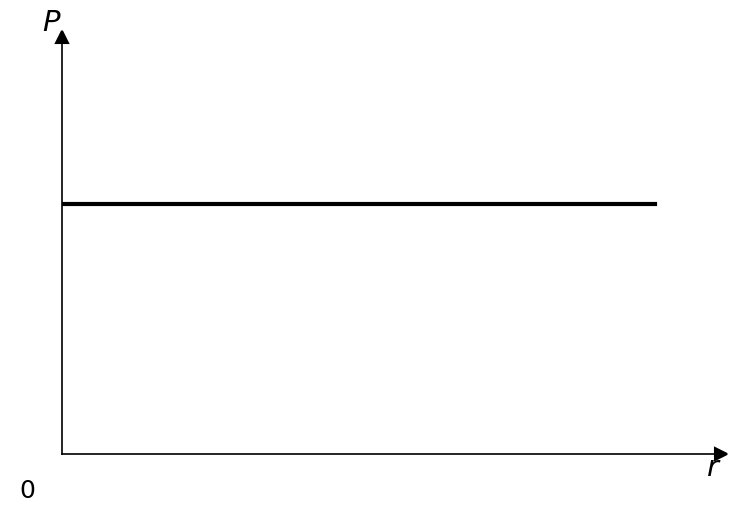
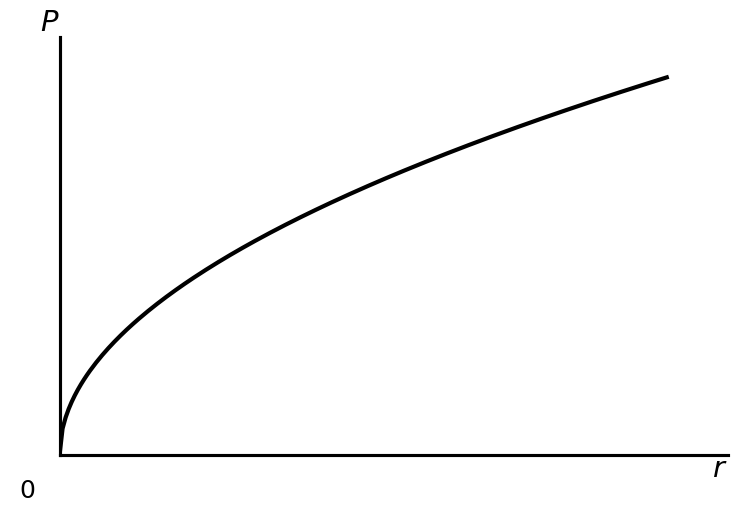
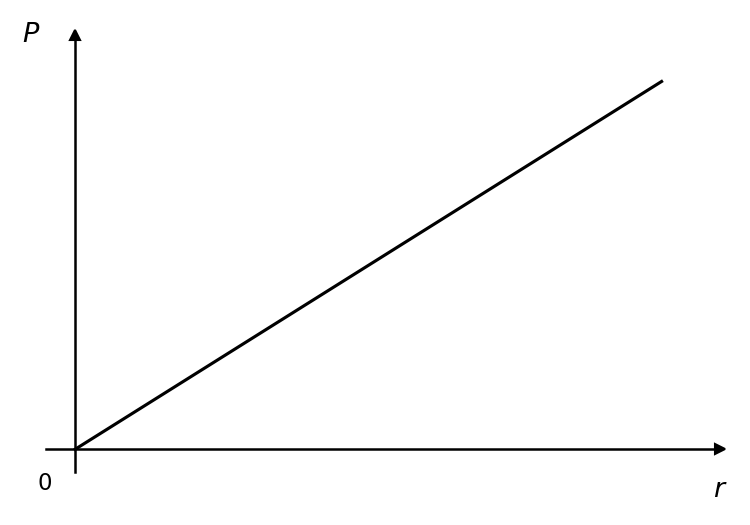
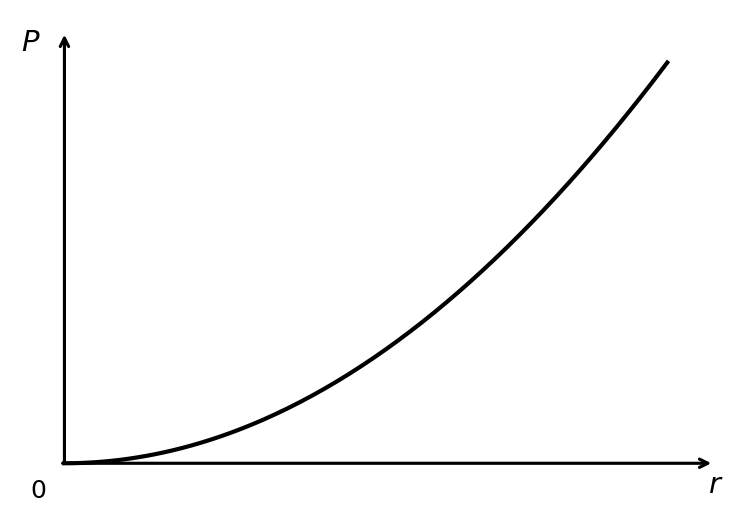
Recall the Stefan-Boltzmann law for the power radiated by a black body. How is the power related to the surface area of the sphere? Then, consider how the surface area of a sphere depends on its radius.
No question on this page matches those filters. Try another difficulty or paper.
27 more Thermal Energy Transfers questions in the app
Every answer is marked mark by mark, IB-style, and the AI tutor helps when you are stuck.
Where marks are lost
- Stopping one step short of the conclusion. Two numbers and no sentence is two marks out of three.
- Answering a procedure question with a platitude.
- Losing precision in Paper 1B. Uniquely to this paper, quoting the right number badly loses marks.