Technology: notes and practice questions
- This topic covers no additional higher level content beyond the standard level material for Technology.
- Standard level content for Technology includes using sensors, identifying and extracting data from databases, generating data from models and simulations, using spreadsheets to manipulate data, representing data graphically, and using computer modelling.
How it is examined
Rarely on its own. It shows up folded into Paper 1B stems that describe an experiment run with a sensor or a datalogger, and in single-mark parts asking why a probe was chosen over an indicator. Tariff 1 to 2 marks.
- Apply technology to collect data: use sensors, identify and extract data from databases, generate data from models and simulations.
- Apply technology to process data: use spreadsheets to manipulate data, represent data in a graphical form, use computer modelling.
Guiding questions
- None given. The tools carry no guiding question.
Linking questions
- Structure 1.5 Graphs can be presented as sketches or as accurately plotted data points. What are the advantages and limitations of each representation?
- Structure 3.1 Why are simulations often used in exploring the trends in chemical reactivity of group 1 and group 17 elements?
- Structure 3.2 How useful are 3D models (real or virtual) to visualize the invisible?
- Reactivity 3.1 When are digital sensors (e.g. pH probes) more suitable than analogue methods (e.g. pH paper/solution)?
Practice questions
5 questions · 1 easy · 4 mediumQuestion 1
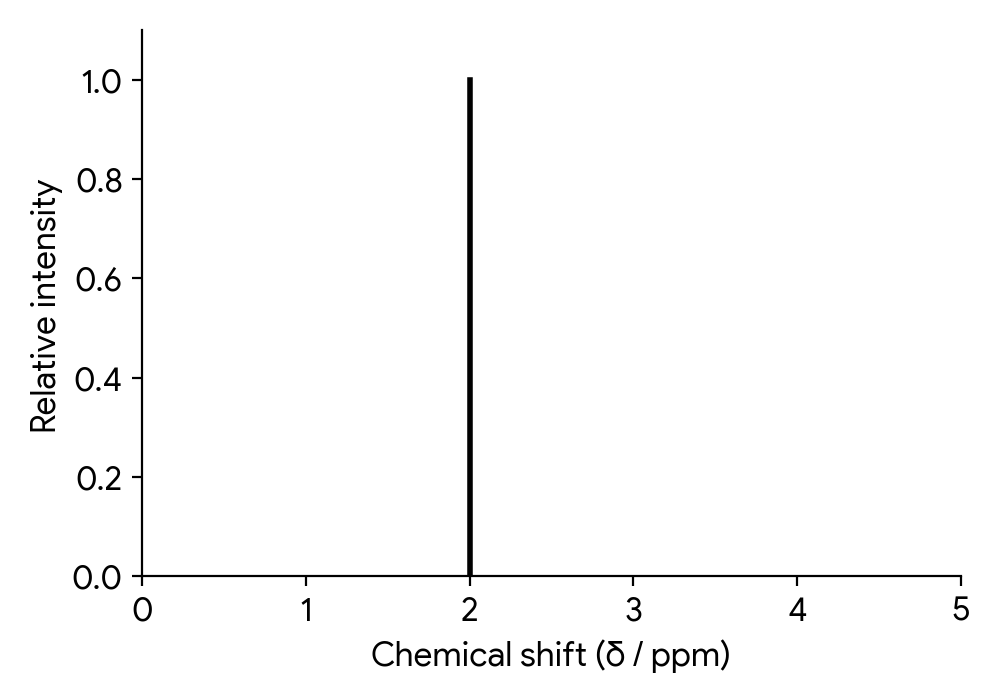
EasyPaper 1A · calculator1 markWhich is the NMR spectrum of propanone?
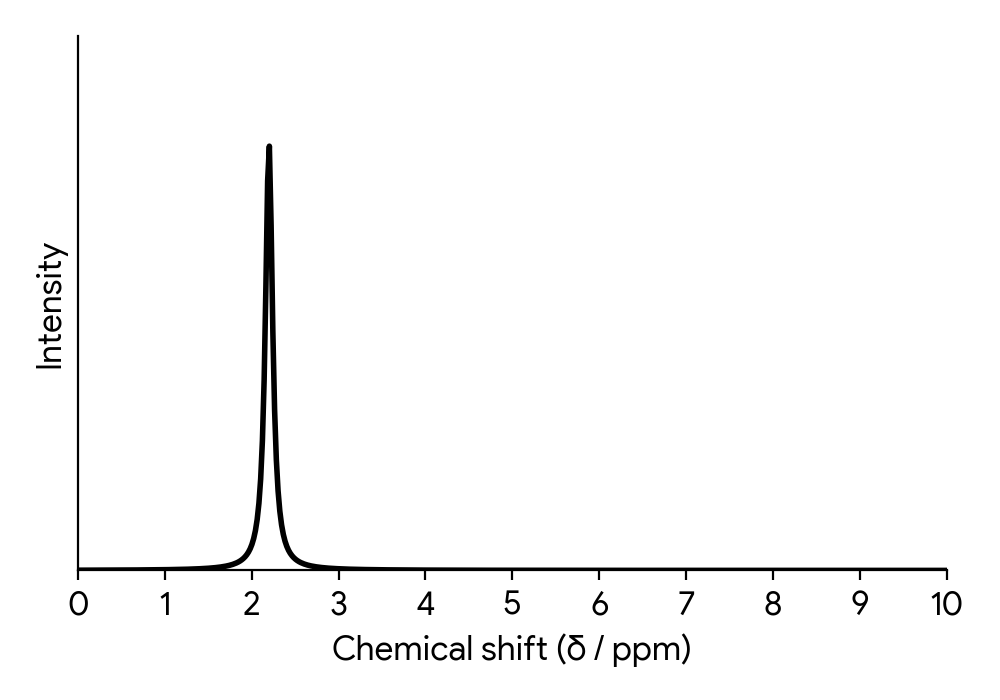
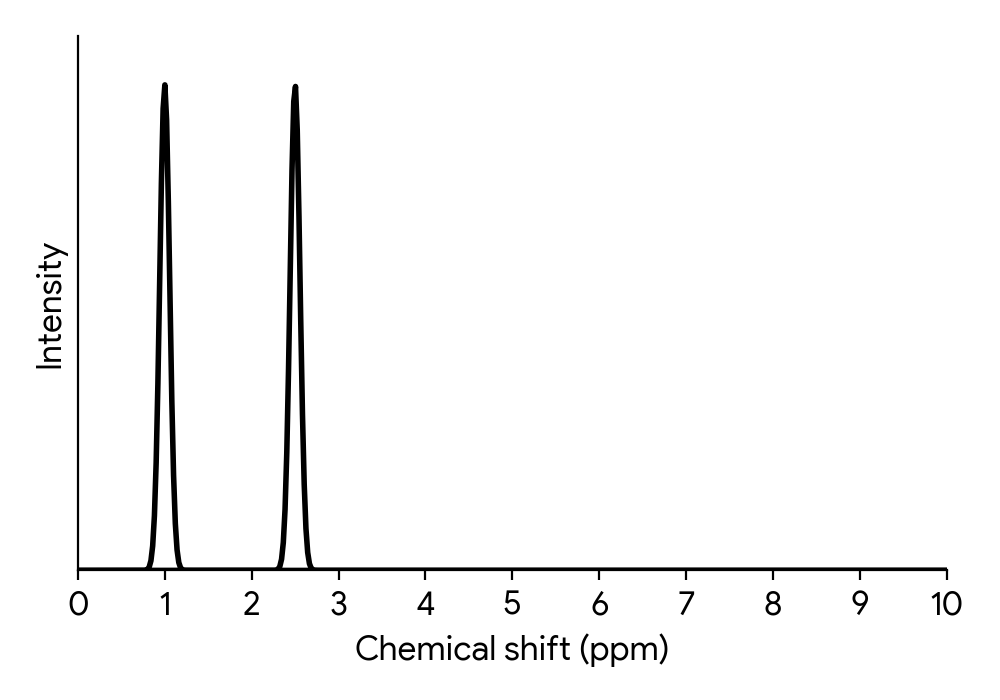
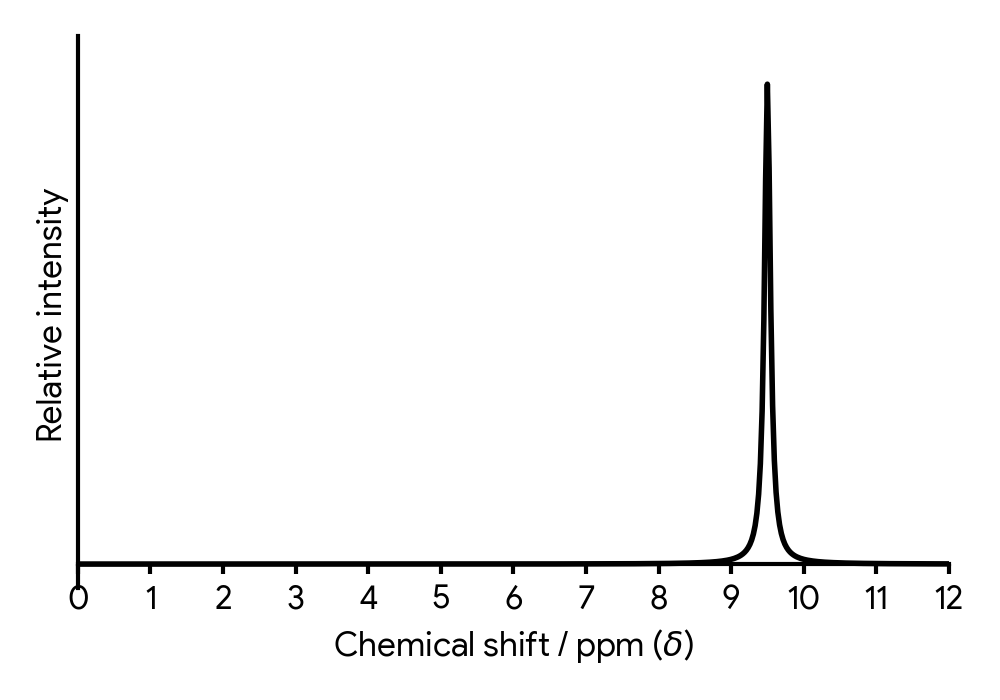
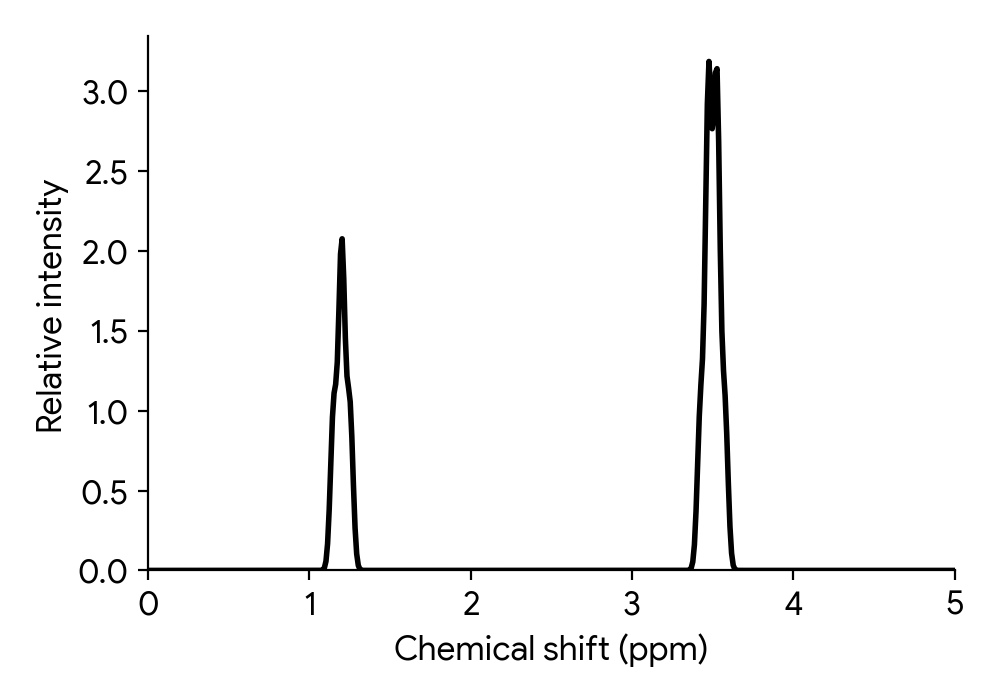
Consider the symmetry of the propanone molecule. How many different chemical environments are there for the hydrogen atoms (protons)? Also, think about the typical chemical shift for protons adjacent to a carbonyl group.
Question 2
MediumPaper 2 · calculator1 markWhich spectroscopic technique(s) can be used to distinguish between the isomers propanal, , and propanone, ?
I. Infrared (IR) spectroscopy
II. H NMR spectroscopy
III. Mass spectrometry
A. I only
B. I and II only
C. II and III only
D. I, II and III
For each technique, identify a key difference in the expected spectrum for an aldehyde compared to a ketone. For IR, look for unique absorptions. For NMR, consider the number of proton environments and their splitting patterns. For mass spectrometry, think about how the molecules might break apart differently.
Question 3
MediumPaper 1A · calculator1 markA student prepares an alcohol with the molecular formula . The product is expected to be either butan-1-ol or butan-2-ol. Which technique would most clearly distinguish between these two isomers?
A. Infrared (IR) spectroscopy
B. Mass spectrometry (MS)
C. ¹H NMR spectroscopy
D. Ultraviolet-visible (UV-Vis) spectroscopy
Consider what information each spectroscopic technique provides. Which technique is most sensitive to the arrangement of hydrogen atoms in a molecule?
Question 4
MediumPaper 1A · calculator1 markWhat is the low-resolution H NMR spectrum of methyl ethanoate?
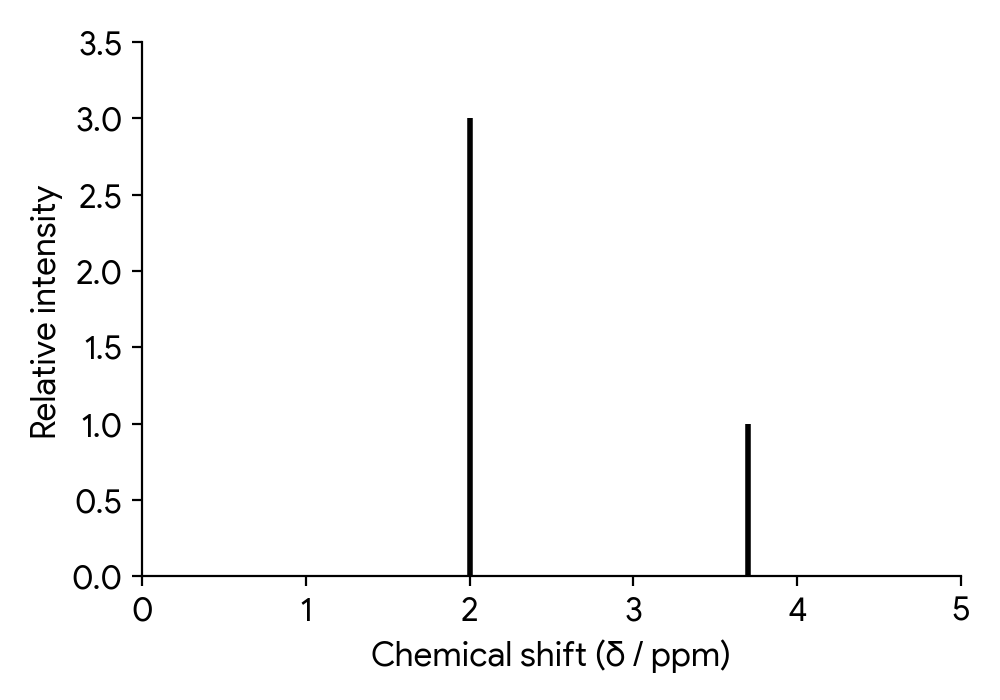
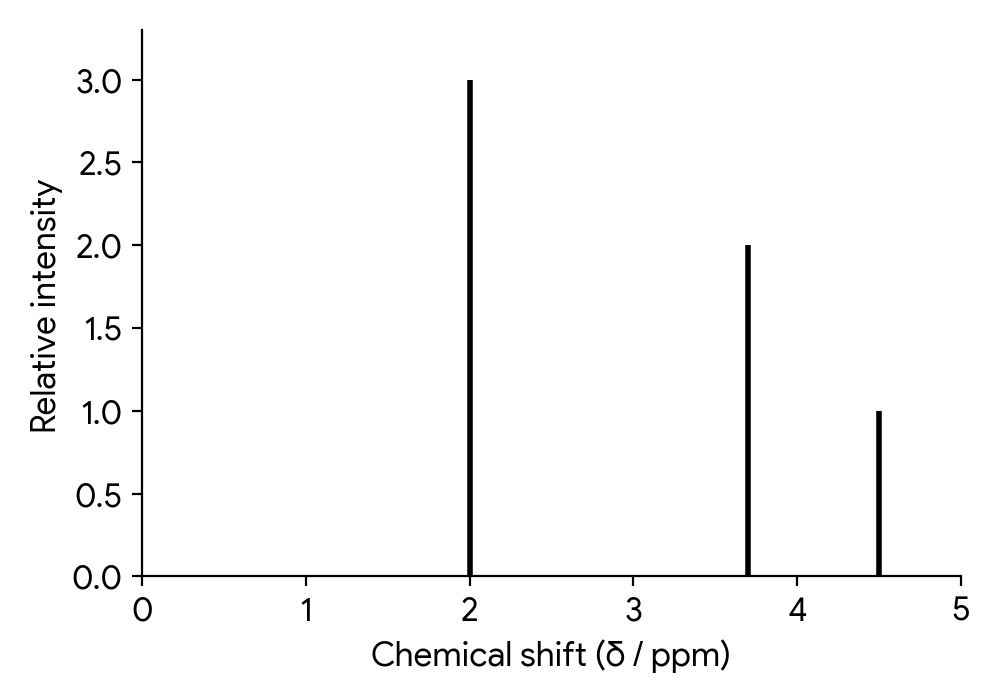
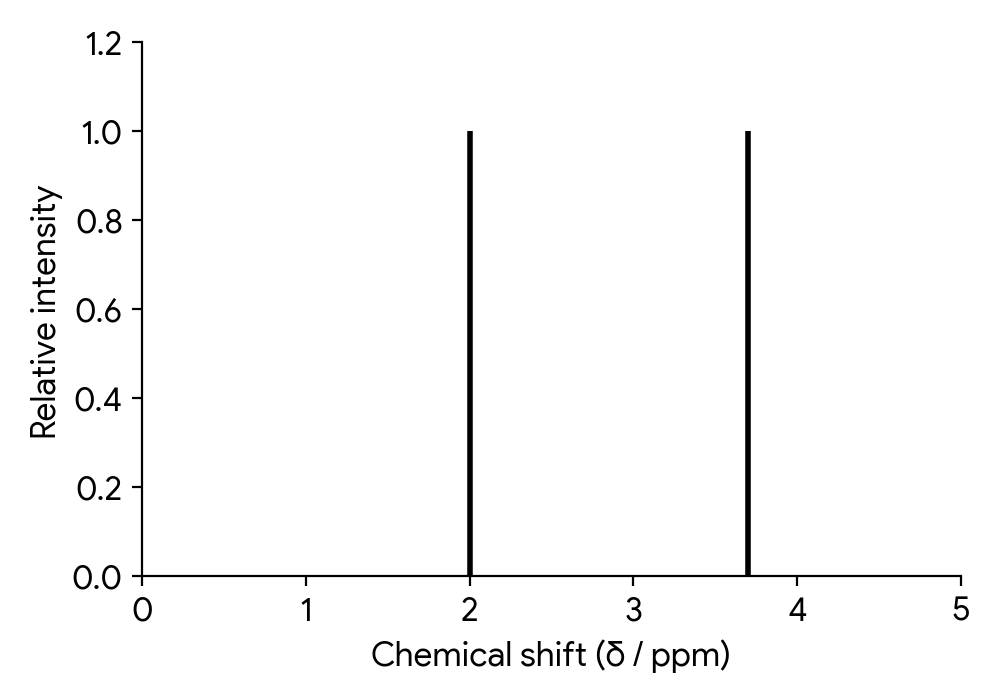
First, draw the structure of methyl ethanoate. Then, identify the number of different proton environments in the molecule. Finally, determine the ratio of the number of protons in each environment. This will give you the number of signals and their integration ratio.
Question 5
MediumPaper 1A · calculator1 markWhich is the mass spectrum of pentan-3-one?
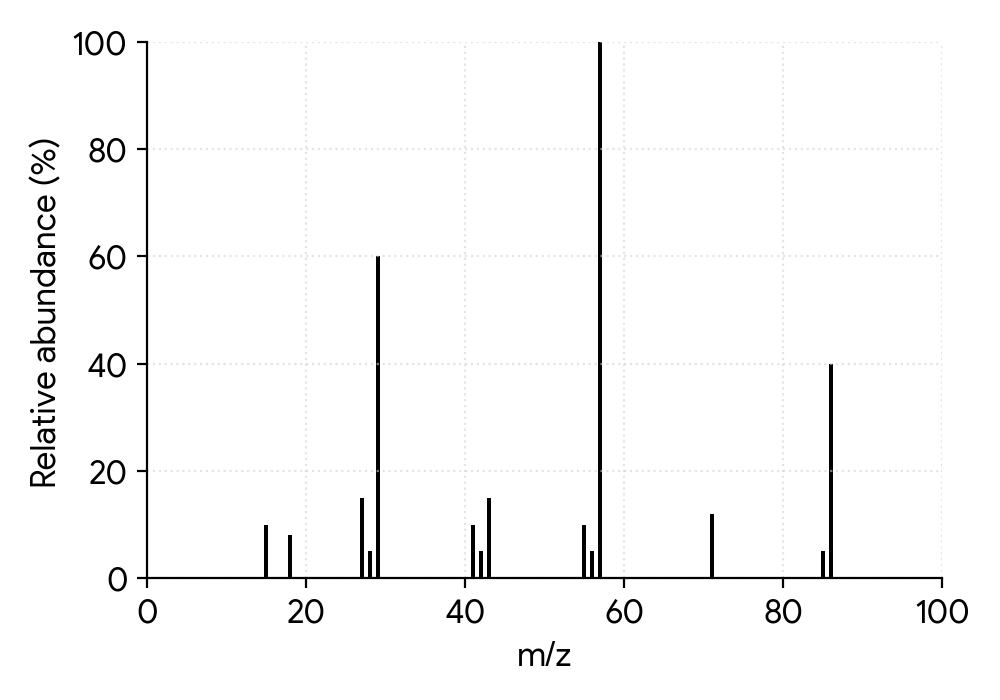
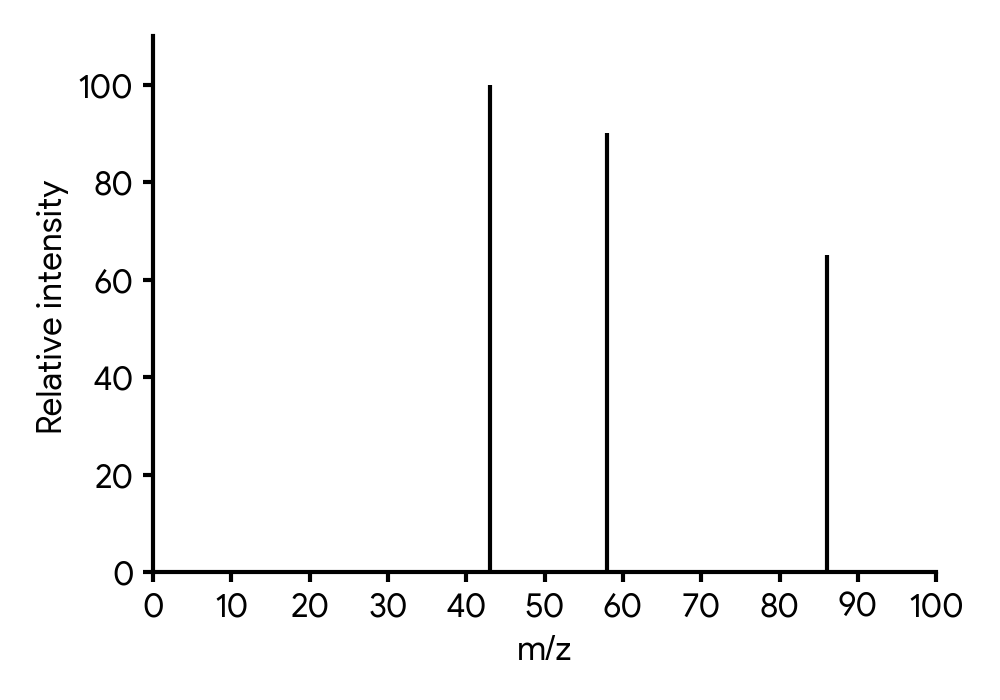
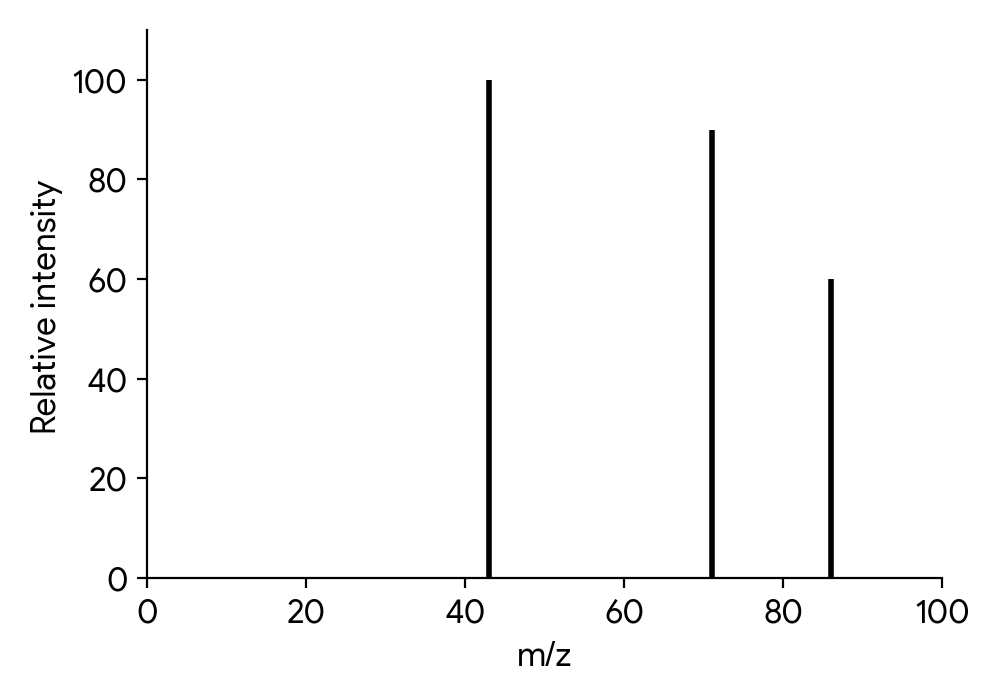
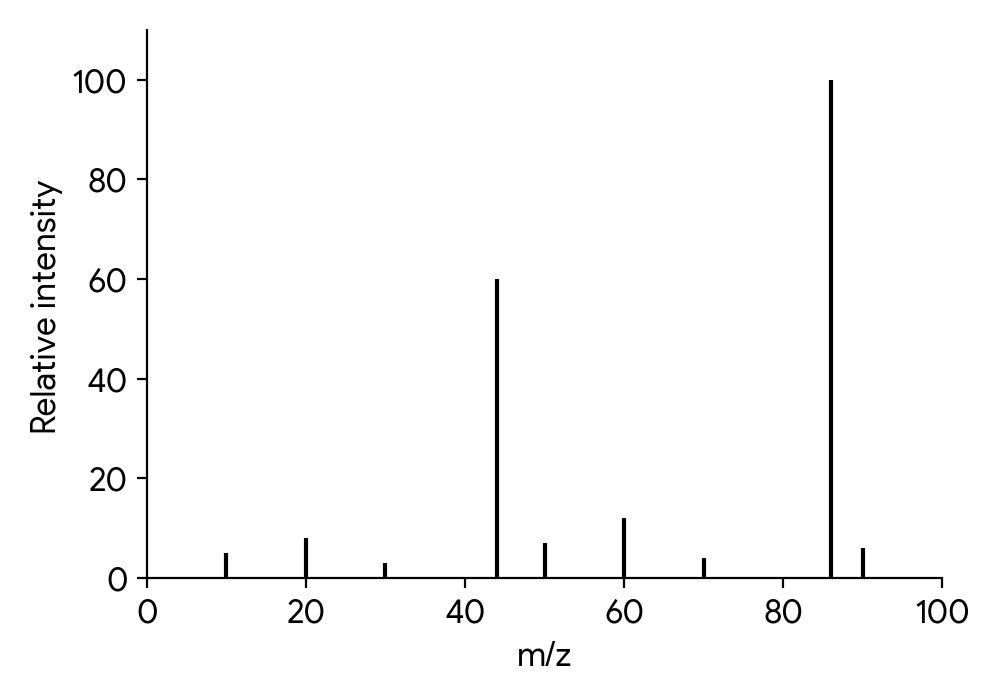
Identify the structure of pentan-3-one and calculate its molar mass to find the molecular ion peak. Then, consider the most likely fragmentation pathway for a ketone, which is alpha-cleavage on either side of the carbonyl group. Calculate the m/z values for the resulting cationic fragments.
No question on this page matches those filters. Try another difficulty or paper.
Every Technology question, marked for you
Every answer is marked mark by mark, IB-style, and the AI tutor helps when you are stuck.
Where marks are lost
- Reaching for "human error" or "only one trial." A source of error has to be a specific step in the method, not a general apology for the result.
- Joining the dots instead of drawing a curve.
- Naming a chemical instead of the property that distinguishes it, or vice versa. Answering with the nearest fact that comes to mind rather than the fact the command term and stem jointly ask for is a recurring way to answer a question that was not, quite, the one asked.