Evolution and Speciation: notes and practice questions
- This topic covers the mechanisms of evolutionary change, including natural and sexual selection, and the process of speciation.
- Evolution is defined as a change in the heritable characteristics of a population over time.
- Genetic variation arises from mutation (new alleles) and sexual reproduction (new allele combinations).
- Overproduction of offspring leads to competition for limited resources, acting as a selective pressure.
- Natural selection occurs when individuals with advantageous heritable traits have higher survival and reproductive fitness.
- Abiotic factors, such as temperature, can also act as selection pressures.
- Speciation is the splitting of a pre-existing species into two or more new species, increasing biodiversity.
- Sexual selection involves traits that enhance mate attraction, driving specific evolutionary changes.
How it is examined
Homologous versus analogous is a standard distinguish item, 2 marks, one for each side. Speciation questions want the sequence: isolation, then differential selection, then reproductive isolation persisting. Paper 2 extended responses on "outline the evidence for evolution" want several distinct evidence types, not one type in depth.
- A4.1.1 Evolution as change in the heritable characteristics of a population. This distinguishes Darwinian evolution from Lamarckism; acquired non-genetic changes are not evolution. NOS: the theory predicts and explains a broad range of observations and is unlikely ever to be falsified, but cannot be formally proved true by correspondence, so it is a pragmatic truth called a theory.
- A4.1.2 Evidence for evolution from base sequences in DNA or RNA and amino acid sequences in proteins. Sequence data gives powerful evidence of common ancestry.
- A4.1.3 Evidence from selective breeding of domesticated animals and crop plants, showing how rapidly evolutionary change can happen.
- A4.1.4 Evidence from homologous structures, with the pentadactyl limb as the required example.
- A4.1.8 Differences and similarities between sympatric and allopatric speciation. Reproductive isolation can be geographic, behavioural or temporal.
- A4.1.9 Adaptive radiation as a source of biodiversity, letting closely related species coexist without competing where there are vacant niches.
- A4.1.10 Barriers to hybridization and sterility of interspecific hybrids as mechanisms preventing the mixing of alleles between species. Courtship behaviour often prevents hybridization in animals; a mule is the example of a sterile hybrid.
- A4.1.11 Abrupt speciation in plants by hybridization and polyploidy, using knotweed or smartweed (genus Persicaria) as the example.
Guiding questions
- What is the evidence for evolution?
- How do analogous and homologous structures exemplify commonality and diversity?
Linking questions
- How does the theory of evolution by natural selection predict and explain the unity and diversity of life on Earth?
- What counts as strong evidence in biology?
Practice questions
9 questions · 3 easy · 4 medium · 2 hardQuestion 1
EasyPaper 2 · calculator5 marks(a) State the biological term for all the interacting organisms in an ecosystem.
(b) State the biological term for the splitting of a pre-existing species into two or more new species.
(c) State the biological term for a group of organisms that have evolved from a common ancestor.
(d) State the biological term for the accumulation of carbon compounds in biomass by autotrophs.
(e) State the biological term for the maximum population size an environment can sustain.
Think about the level of ecological organization that includes multiple different species living together, but does not include the abiotic factors.
What is the evolutionary process that increases biodiversity by creating new distinct lineages?
This term is used in phylogenetic classification to describe a complete branch on an evolutionary tree.
This represents the energy captured by plants that is converted into organic matter.
This limit is determined by the availability of resources such as food, water, and space in the environment.
Question 2
MediumPaper 1A · calculator1 markWhich statement(s) correctly describe(s) analogous structures, such as the wings of a butterfly and the wings of a bat?
I. They are derived from the same ancestral structure.
II. They are the result of convergent evolution.
III. They perform a similar function.
A. I only
B. III only
C. II and III only
D. I, II and III
Consider the definitions of homologous and analogous structures. Think about what 'convergent evolution' means and how it relates to the function and origin of structures in different species.
Question 3
HardPaper 2 · calculator15 marks(a) Outline why viruses are classified as obligate parasites rather than living cells.
(b) Explain the concept of convergent evolution in the context of viral origins.
(c) Discuss the mechanisms of rapid evolution in viruses and the consequences for treating viral diseases.
Think about what structures and metabolic processes viruses lack, and what they must obtain from a host cell in order to replicate.
Do all viruses share a single common ancestor? Consider how different lineages might independently develop similar traits to survive as intracellular parasites.
Consider the mutation rates of RNA viruses like HIV or influenza, how new variation is generated, and how this affects the long-term efficacy of vaccines and antiviral drugs.
Question 4
EasyPaper 1A · calculator1 markIn John Endler's experiments, male guppies (Poecilia reticulata) in pools with no predators evolved to have larger and more brightly coloured spots over several generations.
What evolutionary mechanism primarily drove the increase in spot size and colouration?
A. Sexual selection
B. Natural selection by abiotic factors
C. Interspecific competition
D. Artificial selection
Consider what advantage bright colouration gives a male guppy when it does not need to hide from predators.
Question 5
MediumPaper 1A · calculator1 markThe diagrams show the wing of a bat and the wing of a butterfly.
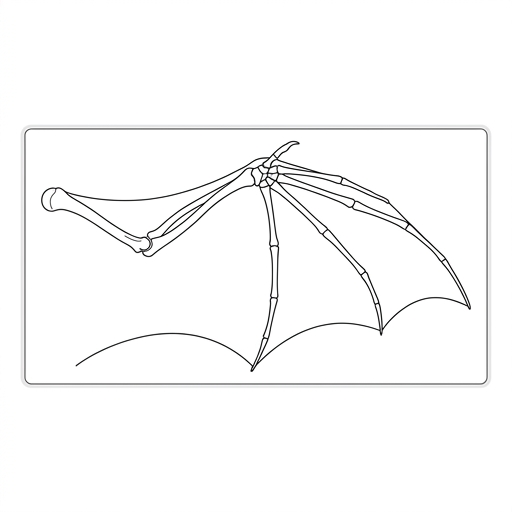
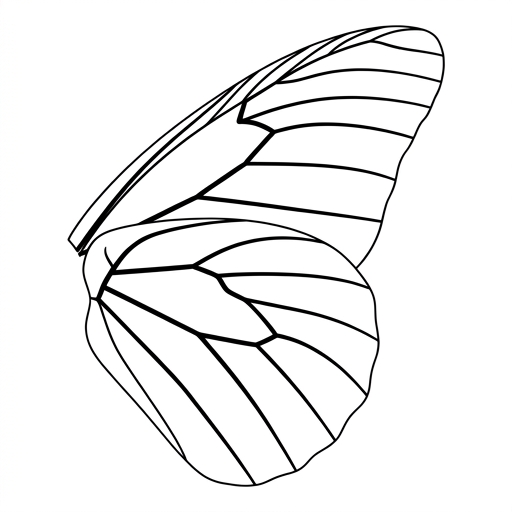
What do these structures demonstrate about the evolution of bats and butterflies?
A. They are homologous structures that show convergent evolution.
B. They are homologous structures that show divergent evolution.
C. They are analogous structures that show divergent evolution.
D. They are analogous structures that show convergent evolution.
Consider the evolutionary origins of bats (mammals) and butterflies (insects). Do their wings originate from a structure present in their last common ancestor? Then, relate this to the correct terms for evolutionary patterns and structural similarities.
Question 6
HardPaper 2 · calculator15 marks(a) Outline the processes that generate genetic variation within a population.
(b) Explain how natural selection acts on this variation to cause evolutionary change.
(c) Discuss how anthropogenic climate change affects the distribution and survival of species in polar habitats, including the emperor penguin.
Think about the original source of new traits and how cell division and reproduction mix these traits.
Consider what happens when a population produces too many offspring, and how advantageous traits affect survival and reproduction.
Include the causes of climate change, its physical effects on polar ice, and specific examples of how this impacts named species like the emperor penguin or walrus.
Question 7
EasyPaper 1A · calculator1 markThe porkfish (Anisotremus virginicus) in the Caribbean Sea and the Panamic porkfish (Anisotremus taeniatus) in the Pacific Ocean are closely related species. They were separated by the formation of the Isthmus of Panama about 3 million years ago.
What was a consequence of this separation that allowed two distinct species to form?
A. Convergent evolution
B. Selective breeding
C. Reproductive isolation
D. Natural selection
Consider what must happen between two populations for them to stop sharing genetic information and diverge into separate species.
Question 8
MediumPaper 1A · calculator1 markWhich statements correctly describe the processes that generate genetic variation within a population?
I. Crossing over generates new alleles.
II. Random orientation of bivalents generates new combinations of alleles.
III. Gene mutation is the original source of new alleles.
A. I and II only
B. II and III only
C. I and III only
D. I, II and III
Consider the difference between creating a brand new version of a gene (an allele) and shuffling the versions that already exist.
Question 9
MediumPaper 1A · calculator1 markWhich scenario is an example of convergent evolution?
A. The development of similar streamlined body shapes in dolphins and sharks
B. The divergence of Darwin's finches into multiple species with different beak shapes
C. The presence of a pentadactyl limb in both bats and humans
D. The breeding of different dog varieties from a common wolf ancestor
Consider whether the organisms share a recent common ancestor or if they developed similar traits independently due to similar environmental pressures.
No question on this page matches those filters. Try another difficulty or paper.
Every Evolution and Speciation question, marked for you
Every answer is marked mark by mark, IB-style, and the AI tutor helps when you are stuck.
Where marks are lost
- Command terms are consistently under-read. Students answer describe when the question said explain, so they give an account with no reasons and cap at half marks. The reverse also happens on outline, where a student writes an essay for a 2-mark summary and runs out of time.