Conservation of Biodiversity: notes and practice questions
- This topic covers the definition of biodiversity, its current status, causes of its loss, and various conservation approaches.
- Biodiversity encompasses ecosystem diversity, species diversity, and genetic diversity.
- Evidence suggests a current sixth mass extinction, primarily driven by human activities.
- Anthropogenic causes of species extinction include habitat loss, over-exploitation, pollution, and invasive alien species.
- Conservation strategies involve both in situ (e.g., nature reserves) and ex situ (e.g., seed banks) methods.
- Conservation efforts may prioritize evolutionarily distinct and globally endangered (EDGE) species.
How it is examined
This is where Paper 2 extended-response questions live: outline the causes of the biodiversity crisis, discuss approaches to conservation, explain the rationale for EDGE. Answers that list causes without linking them to a mechanism of loss cap out early. Named case studies are worth having ready, because the mark scheme often credits a specific example separately from the general point.
- A4.2.1 Biodiversity as the variety of life in all its forms, levels and combinations, including ecosystem diversity, species diversity and genetic diversity.
- A4.2.2 Comparisons between the current number of species on Earth and past levels of biodiversity. Millions have been described and many remain to be discovered; fossil evidence suggests more species are alive now than at any time in the past. NOS: classification is pattern recognition, and the same observations can be classified differently, so "splitters" recognize more species than "lumpers".
- A4.2.3 Causes of anthropogenic species extinction. Study the current sixth mass extinction, not non-anthropogenic causes of earlier ones. Three or more brief case studies are required: North Island giant moa (Dinornis novaezealandiae) for loss of terrestrial megafauna, Caribbean monk seal (Neomonachus tropicalis) for loss of a marine species, plus one other species from an area familiar to students.
- A4.2.4 Causes of ecosystem loss, limited to directly or indirectly anthropogenic causes. Two case studies: loss of mixed dipterocarp forest in Southeast Asia, plus a local one if possible.
Guiding questions
- What factors are causing the sixth mass extinction of species?
- How can conservationists minimize the loss of biodiversity?
Linking questions
- In what ways is diversity a property of life at all levels of biological organization?
- How does variation contribute to the stability of ecological communities?
Practice questions
9 questions · 3 easy · 5 medium · 1 hardQuestion 1
EasyPaper 1A · calculator1 markThe Caribbean monk seal (Neomonachus tropicalis) was a species of seal native to the Caribbean Sea. It was declared extinct in 2008, although the last confirmed sighting was in 1952.
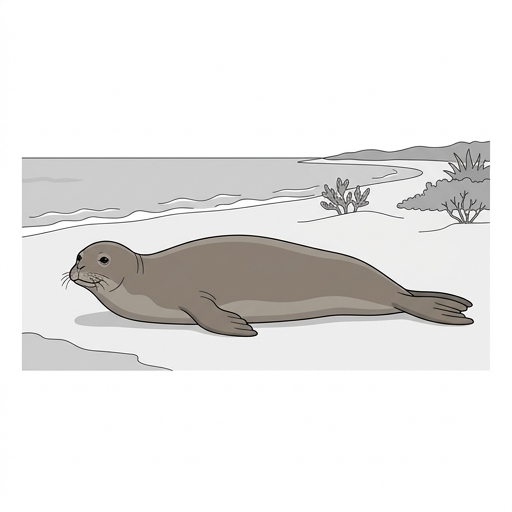
What was the primary anthropogenic cause of the extinction of the Caribbean monk seal?
A. Marine pollution from industrial waste
B. Loss of habitat due to rising sea levels
C. Competition from invasive marine species
D. Over-exploitation by humans for oil and food
Consider the historical context of the seal's decline, which began centuries ago. Which human activity was most prevalent and damaging to large marine mammals during that period?
Question 2
MediumPaper 2 · calculator5 marks(a) Explain why rapid climate change is a major driver of the current biodiversity crisis.
Think about the speed of environmental changes compared to how quickly species can adapt, evolve, or move, and the ultimate consequence for species survival.
Question 3
HardPaper 2 · calculator15 marks(a) Outline how human activities can destabilize ecosystems by causing biodiversity loss.
(b) Describe how positive feedback loops accelerate global warming and how this impacts polar habitats.
(c) Explain how anthropogenic climate change threatens the stability of coral reef ecosystems.
Think about the main anthropogenic causes of extinction and how the loss of species affects the overall ecosystem.
A positive feedback loop amplifies an initial change. Consider what happens when ice melts or permafrost thaws, and how the loss of ice affects specific polar animals.
Discuss the causes of climate change and the two main threats it poses to coral reefs: rising temperatures and changes in ocean chemistry.
Question 4
EasyPaper 1A · calculator1 markWhich strategy is most appropriate for restoring biodiversity in a degraded ecosystem, such as the Hinewai Reserve?
A. Rewilding to re-establish natural ecological processes
B. Harvesting resources at a rate equal to their maximum replacement rate
C. Introducing alien species to fill vacant ecological niches
D. Relocating all threatened species to ex situ conservation facilities
Consider which option actively repairs the ecosystem in its original location rather than just preventing further damage or moving species elsewhere.
Question 5
MediumPaper 2 · calculator10 marksThe graph shows the concentrations of PFAS (per- and polyfluoroalkyl substances), a group of synthetic chemicals, in blood samples from emperor penguins (Aptenodytes forsteri) in Antarctica.
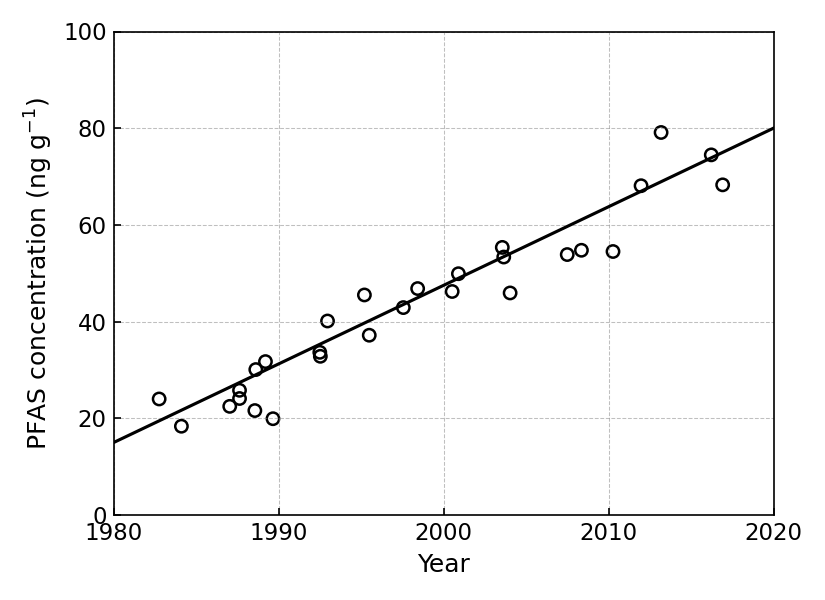
Explain how PFAS can become more concentrated in the blood of emperor penguins than in the surrounding Antarctic seawater.
(b.i) Outline the trend shown in the graph.
(b.ii) Suggest reasons for the trend.
(c) Outline one other anthropogenic threat to emperor penguin populations.
Think about how chemicals move through a food chain and what happens if they cannot be broken down or excreted by the body.
Look at the overall direction of the line of best fit and use data from the axes to describe the change.
Where do synthetic chemicals come from, and how might they reach an isolated environment like Antarctica?
Consider the specific habitat requirements of emperor penguins and how human-induced climate change affects this.
Question 6
EasyPaper 1A · calculator1 markWhich of the following are anthropogenic causes of species extinction?
I. Over-exploitation of natural populations
II. Pollution of aquatic and terrestrial environments
III. Implementation of in situ conservation strategies
A. I and II only
B. I and III only
C. II and III only
D. I, II and III
Consider which of the options describe human activities that harm ecosystems, and which describe efforts to protect them.
Question 7
MediumPaper 2 · calculator4 marks(a) Describe the strategies used in the rewilding of the Hinewai Reserve and the ecological benefits that have resulted.
Think about what human activities were stopped, how the plant community was allowed to recover, and what positive effects this had on the environment.
Question 8
MediumPaper 1A · calculator1 markThe table shows information about four species of amphibians.
| Species | IUCN Red List status | Number of closely related species in the same family |
|---|---|---|
| A | Least Concern | 0 |
| B | Critically Endangered | 42 |
| C | Vulnerable | 8 |
| D | Critically Endangered | 0 |
Which species would be the highest priority for conservation by the EDGE of Existence programme?
A. Species A
B. Species B
C. Species C
D. Species D
Recall what the acronym EDGE stands for and how both parts of the name apply to the data in the table.
Question 9
MediumPaper 1A · calculator1 markThe Caribbean monk seal (Neomonachus tropicalis) was once abundant in the Gulf of Mexico and the Caribbean Sea but is now extinct.
What was the primary anthropogenic cause of the extinction of this species?
A. Over-exploitation for its blubber and meat
B. Habitat loss due to coastal development
C. Introduction of invasive predators to its breeding grounds
D. Biomagnification of chemical pollutants in the marine food web
Recall the specific historical reasons for the decline of the named examples of extinct species in the syllabus.
No question on this page matches those filters. Try another difficulty or paper.
Every Conservation of Biodiversity question, marked for you
Every answer is marked mark by mark, IB-style, and the AI tutor helps when you are stuck.
Where marks are lost
- Command terms are consistently under-read. Students answer describe when the question said explain, so they give an account with no reasons and cap at half marks. The reverse also happens on outline, where a student writes an essay for a 2-mark summary and runs out of time.