Carbohydrates and Lipids: notes and practice questions
- This topic explores the structure, function, and chemical properties of carbohydrates and lipids, essential molecules for life.
- Carbon atoms form diverse compounds through covalent bonds, including chains and rings.
- Macromolecules like polysaccharides and triglycerides are formed by condensation reactions and broken by hydrolysis.
- Monosaccharides, such as glucose, are soluble and used for energy.
- Polysaccharides like starch and glycogen are compact energy stores, while cellulose provides structural support.
- Lipids are hydrophobic; triglycerides serve as long-term energy storage and thermal insulation.
- Phospholipids are amphipathic, forming cell membrane bilayers.
- Saturated, monounsaturated, and polyunsaturated fatty acids differ in double bonds and melting points.
- Glycoproteins play a role in cell recognition.
How it is examined
Structure recognition from diagrams is common in Paper 1A. Paper 2 asks compare starch with glycogen, or explain why cellulose is a structural polysaccharide, and the beta-glucose alternating-orientation point is the mark students most often miss. Condensation and hydrolysis word equations are 1-mark items.
- B1.1.1 Chemical properties of a carbon atom that allow diverse compounds. The nature of a covalent bond; a carbon atom can form up to four single bonds or a mix of single and double bonds with carbon or other non-metals; diversity includes branched and unbranched chains and single or multiple rings. NOS: scientific conventions come from international agreement, here the SI prefixes kilo, centi, milli, micro and nano.
- B1.1.2 Production of macromolecules by condensation reactions linking monomers into a polymer. Be familiar with examples of polysaccharides, polypeptides and nucleic acids.
- B1.1.3 Digestion of polymers into monomers by hydrolysis. Water molecules split to provide the -H and -OH groups incorporated into the monomers.
- B1.1.4 Form and function of monosaccharides. Recognize pentoses and hexoses from ring-form molecular diagrams. Glucose is the worked example, linking properties to use: solubility, transportability, chemical stability, and the energy yield from oxidation.
Guiding questions
- In what ways do variations in form allow diversity of function in carbohydrates and lipids?
- How do carbohydrates and lipids compare as energy storage compounds?
Linking questions
- How can compounds synthesized by living organisms accumulate and become carbon sinks?
- What are the roles of oxidation and reduction in biological systems?
Practice questions
12 questions · 6 easy · 5 medium · 1 hardQuestion 1
EasyPaper 1A · calculator1 markWhich of the following molecules contain the element nitrogen?
I. A triglyceride
II. An amino acid
III. A monosaccharide
A. I only
B. II only
C. I and II only
D. II and III only
Consider the basic chemical structure of each type of molecule. Which one has a functional group containing nitrogen?
Question 2
MediumPaper 2 · calculator4 marksThe diagram shows the structure of a phospholipid, a key component of cell membranes.
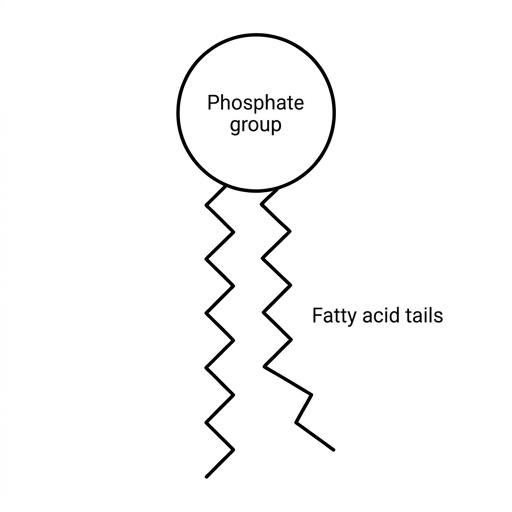
(a) State the term that describes molecules, such as phospholipids, which have both hydrophilic and hydrophobic regions.
(b) Explain how the properties of phospholipids contribute to the structure and function of the cell membrane.
Think about the word that describes having two opposing properties, in this case, an attraction to water and a repulsion from water.
Consider how the hydrophilic heads and hydrophobic tails arrange themselves in an aqueous environment and what kind of barrier this arrangement creates.
Question 3
HardPaper 2 · calculator12 marksA study investigated the association between different dietary patterns and blood lipid profiles in a large group of adults. The chart below shows the average composition of dietary fats for a typical Western diet compared to a Mediterranean diet.
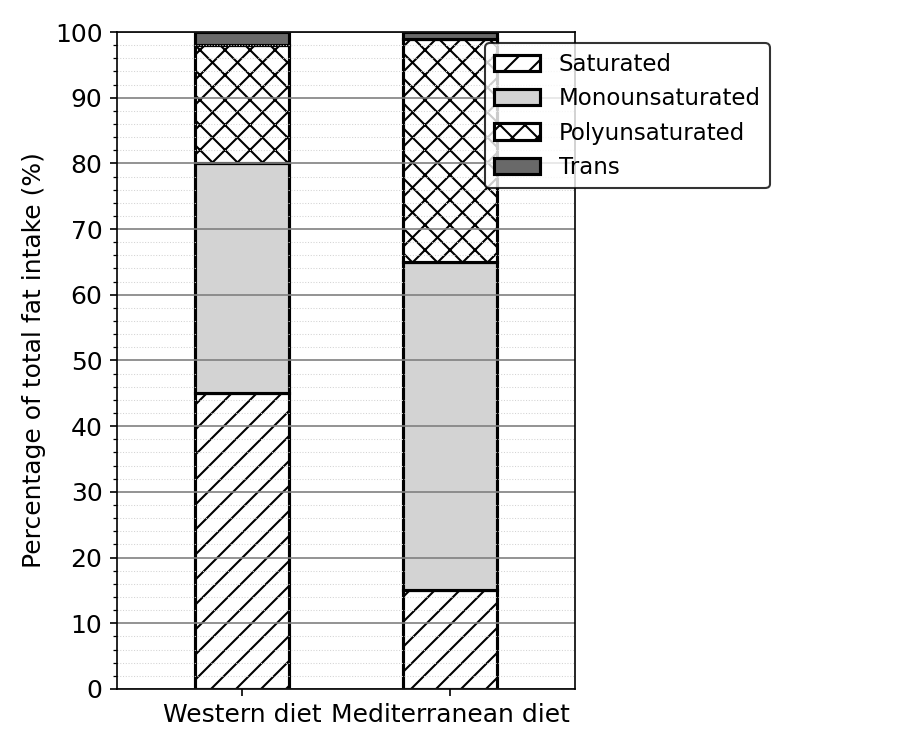
(a) Identify the percentage of fat intake from monounsaturated fats in the Mediterranean diet.
(b) Calculate the difference in the percentage of saturated fat intake between the Western and Mediterranean diets.
(c) Compare and contrast the composition of dietary fats in the Western and Mediterranean diets shown in the chart.
(d) The total daily fat intake was not the same for all participants. Explain why it is not possible to determine from the bar chart which dietary group consumed the greater mass of polyunsaturated fat.
Further data was collected on the relationship between saturated fat intake and blood cholesterol levels. LDL (low-density lipoprotein) is often called 'bad cholesterol' and HDL (high-density lipoprotein) is often called 'good cholesterol'.
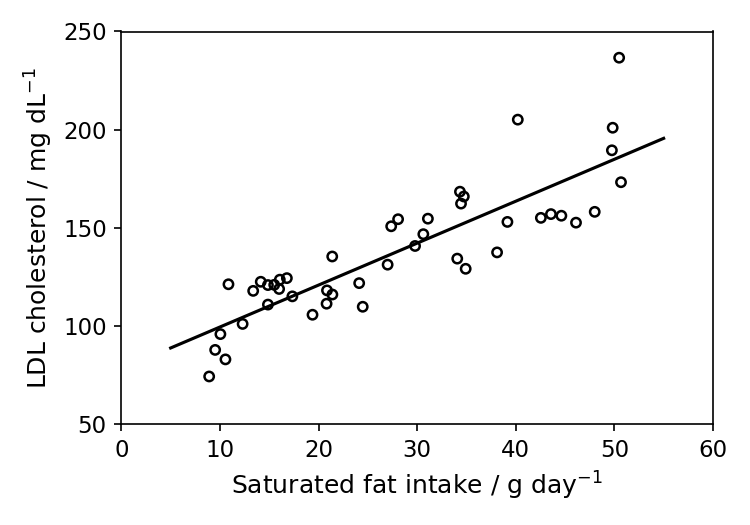
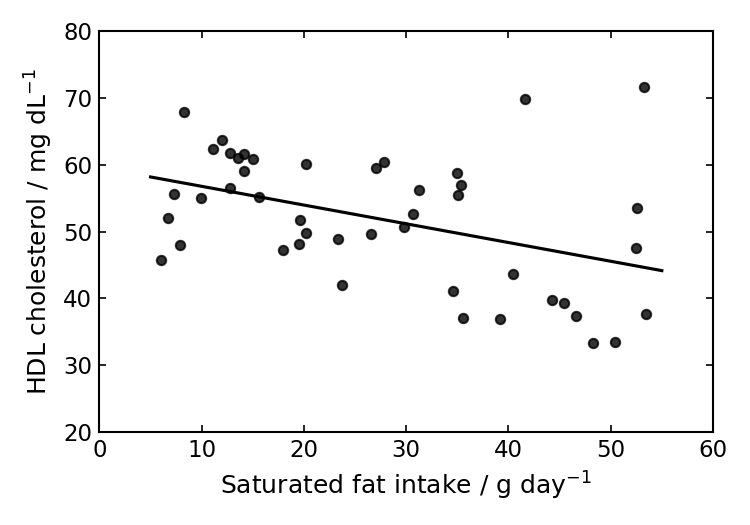
(e) Using the graphs, describe the effect of increasing daily saturated fat intake on LDL and HDL cholesterol levels.
(f) State one harmful effect of high levels of LDL in the blood.
(g) Discuss the evidence from this study that a Mediterranean diet is healthier than a Western diet.
Look at the bar labelled 'Mediterranean diet'. Find the segment corresponding to monounsaturated fats and read its value from the key or labels.
Find the percentage of saturated fat for the Western diet and for the Mediterranean diet. Then, subtract the smaller value from the larger value.
For a 'compare and contrast' question, you need to state at least one similarity and one difference based on the data provided.
Consider what the y-axis of the chart represents. Does it show absolute amounts or proportions?
For each graph, state the trend you observe. Is the relationship positive (as one variable increases, so does the other) or negative (as one increases, the other decreases)?
Think about where excess cholesterol transported by LDL might be deposited in the body and what the consequences are for the circulatory system.
Synthesise the information from all the data provided. Link the dietary composition (bar chart) to the health markers (scatter plots). A good 'discuss' answer considers both points for and against (or limitations of) the evidence.
Question 4
EasyPaper 1A · calculator1 markWhat is formed during the condensation reaction between three fatty acids and a single glycerol molecule?
A. A triglyceride and three molecules of water
B. A phospholipid and three molecules of water
C. A triglyceride only
D. A steroid and one molecule of water
Recall the structure of lipids. A condensation reaction involves the removal of a water molecule to form a bond. How many bonds are formed in this reaction?
Question 5
MediumPaper 1A · calculator1 markWhich of the following diagrams represents a saturated fatty acid?
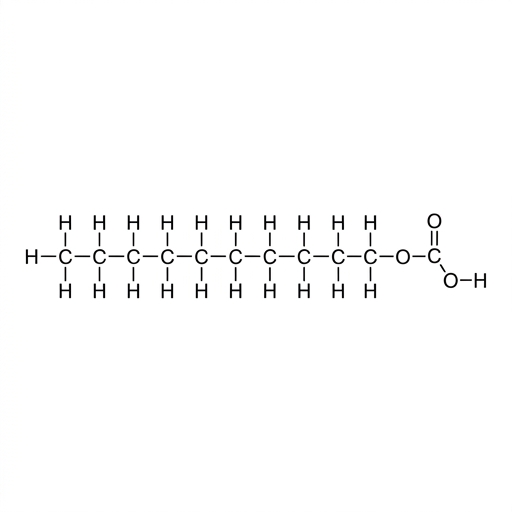
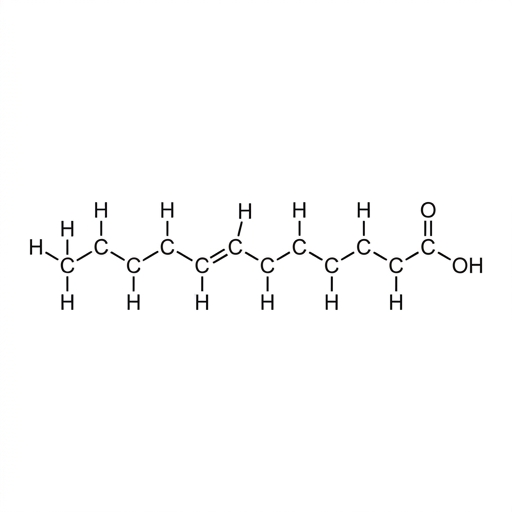
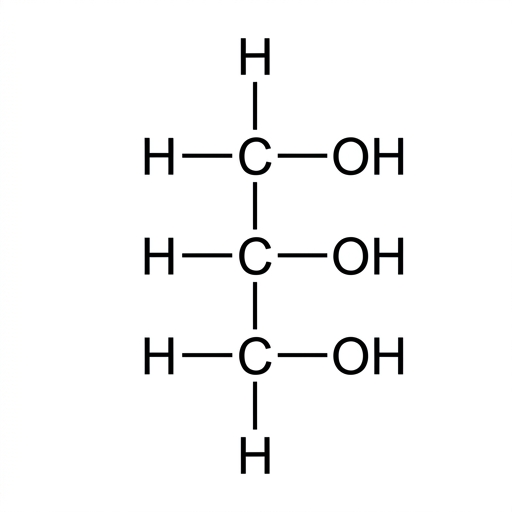
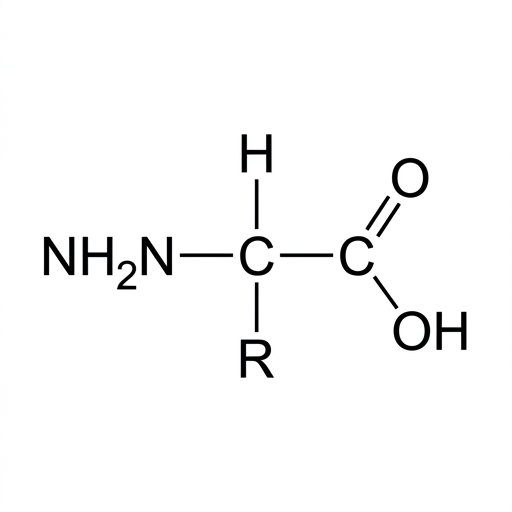
A saturated fatty acid has a hydrocarbon chain where all the carbon-carbon bonds are single bonds. Look for a structure that fits this description and also has a carboxyl group.
Question 6
EasyPaper 1A · calculator1 markWhat describes the structure of glycogen?
A. Unbranched polymer of alpha-glucose molecules
B. Branched polymer of alpha-glucose molecules
C. Unbranched polymer of beta-glucose molecules
D. Branched polymer of beta-glucose molecules
Think about whether glycogen is used for energy storage or structural support, and which type of glucose forms branched chains for storage.
Question 7
MediumPaper 2 · calculator10 marks(a) Distinguish between saturated and unsaturated fatty acids.
(b) Compare and contrast the structures of triglycerides and phospholipids.
(c) Distinguish between glycogen and cellulose in their structure and function.
Think about the types of covalent bonds between the carbon atoms in the hydrocarbon chain and how this affects their physical properties.
Both are types of lipids built on a similar backbone, but they interact with water differently due to the presence of a specific functional group.
Consider the specific type of glucose monomer used for each, how the chains are arranged (branched vs unbranched), and where these molecules are found in nature.
Question 8
EasyPaper 1A · calculator1 markWhich process is an example of anabolism?
A. Hydrolysis of triglycerides
B. Condensation of monosaccharides
C. Oxidation of carbon compounds
D. Digestion of polypeptides
Anabolism involves the synthesis of complex molecules from simpler monomers, often requiring energy.
Question 9
MediumPaper 2 · calculator10 marks(a) Triglycerides are the main component of adipose tissue in mammals. They are non-polar molecules and are therefore hydrophobic.
Explain the chemical reasons why non-polar molecules are hydrophobic.
(b.i) Outline how the hydrophobic nature of triglycerides makes them well-suited for long-term energy storage in animals.
(b.ii) Steroid hormones, such as oestradiol, are lipids.
State how the hydrophobic nature of oestradiol allows it to enter a target cell.
(c) Explain how the amphipathic properties of phospholipids lead to the formation of a stable cell membrane.
Think about the types of bonds water forms with itself and why it cannot form these bonds with non-polar molecules.
Consider how water affects the mass and volume of stored molecules, and how it affects osmosis.
Think about the structure of the cell membrane and how non-polar molecules cross it.
Define amphipathic and describe how the different parts of the phospholipid interact with water.
Question 10
EasyPaper 1A · calculator1 markWhich process describes the formation of a disaccharide from two monosaccharides?
A. A condensation reaction producing a water molecule
B. A hydrolysis reaction producing a water molecule
C. A condensation reaction consuming a water molecule
D. A hydrolysis reaction consuming a water molecule
Think about what the word 'condensation' implies in terms of water, and whether building a larger molecule from smaller subunits requires or releases water.
Question 11
MediumPaper 2 · calculator5 marks(a) Arctic reindeer (Rangifer tarandus) experience extreme temperature fluctuations in their extremities. The plasma membranes in the cells of their lower legs contain a high proportion of cholesterol, which is a type of steroid.
Outline the structural characteristics of steroid molecules.
(b) Explain how the presence of cholesterol helps maintain the physical properties of the cell membranes in the reindeer's extremities across a wide range of temperatures.
Think about the number and shape of the carbon rings that make up the core structure of molecules like cholesterol and testosterone.
Consider how cholesterol interacts with phospholipid tails when the environment is very cold versus when it is warm.
Question 12
EasyPaper 1A · calculator1 markWhat is the function of starch in plant cells?
A. It acts as a compact store of energy.
B. It provides tensile strength to the cell wall.
C. It maintains the turgor pressure of the vacuole.
D. It controls the movement of substances into the cell.
Consider the differences between the roles of structural polysaccharides and storage polysaccharides in plants.
No question on this page matches those filters. Try another difficulty or paper.
Every Carbohydrates and Lipids question, marked for you
Every answer is marked mark by mark, IB-style, and the AI tutor helps when you are stuck.
Where marks are lost
- Command terms are consistently under-read. Students answer describe when the question said explain, so they give an account with no reasons and cap at half marks. The reverse also happens on outline, where a student writes an essay for a 2-mark summary and runs out of time.
- compare and contrast answers give only similarities, or only differences.